Electrical Upgrades for Alaska Homes
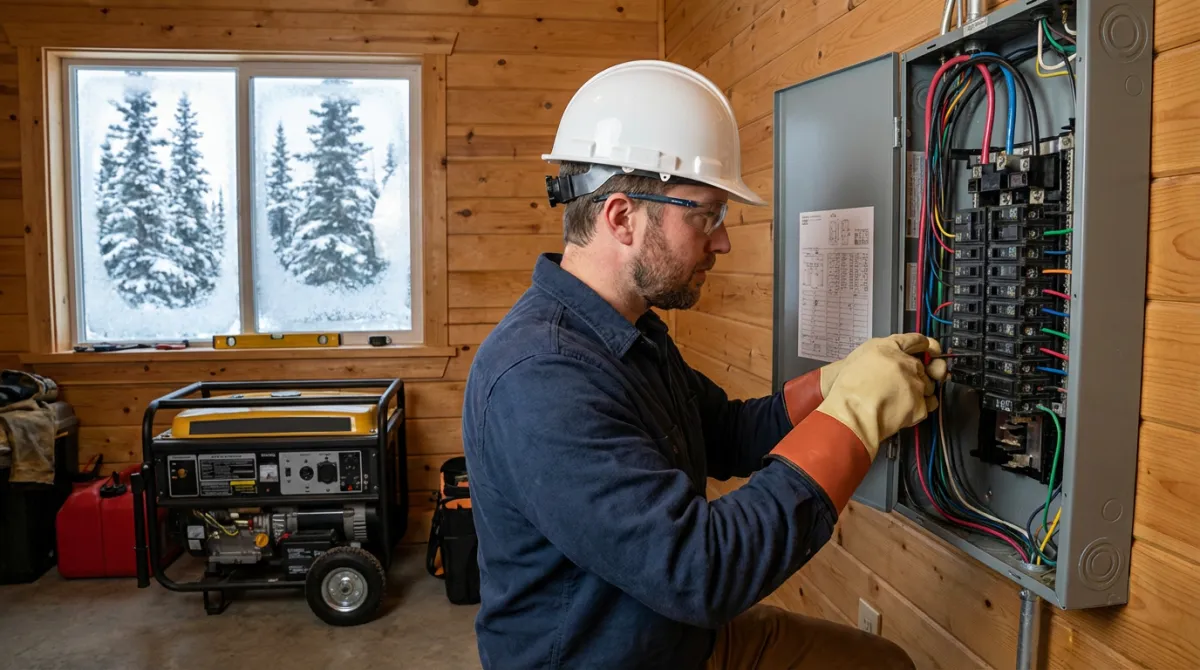
Alaska puts unique demands on a home’s electrical system. Extended darkness through winter months drives up lighting needs. Backup power isn’t a luxury — it’s a near-necessity when outages hit during -30F cold snaps. Older homes built with 100-amp panels can’t keep up with modern loads from heat pumps, electric vehicles, and high-draw appliances. And the combination of cold, moisture, and extreme temperature swings puts stress on wiring, outlets, and panels that homes in milder climates simply don’t face.
If your Alaska home still runs on the electrical infrastructure it was built with decades ago, upgrading isn’t just about convenience — it’s about safety, reliability, and preparing your home for how you actually live today.
Panel Upgrades: 100-Amp to 200-Amp
The electrical panel is the heart of your home’s power distribution. It receives electricity from the utility and routes it through individual circuits to every outlet, light, and appliance in the house. If your panel can’t handle the load, circuits trip, systems underperform, and safety risks increase.
Why Alaska Homes Need Bigger Panels
Many homes built before the 1990s — and especially those built in the 1960s through 1980s — were wired with 100-amp service panels. At the time, that was adequate. Homes had fewer appliances, no electric vehicle chargers, simpler heating systems, and lower overall electrical demand.
Today’s Alaska home may need power for:
- Electric or dual-fuel heating systems
- Heat trace on water lines, roofs, and gutters
- A backup generator with an automatic transfer switch
- An EV charger (Level 2, 240V)
- Multiple high-draw kitchen appliances
- Home offices with computers, monitors, and networking equipment
- Hot tubs, saunas, or workshop equipment
A 100-amp panel can’t safely support all of that simultaneously. Upgrading to a 200-amp panel gives you the capacity to run modern loads without tripping breakers or overloading circuits.
What a Panel Upgrade Involves
A panel upgrade typically includes:
- Replacing the main breaker panel with a new 200-amp rated unit
- Upgrading the service entrance cable from the utility meter to the panel
- Replacing the meter base (may require coordination with your electric utility)
- Bringing the panel up to current National Electrical Code (NEC) standards
- Adding dedicated circuits for high-draw loads (dryer, range, HVAC, etc.)
- Installing arc-fault circuit interrupters (AFCIs) on bedroom circuits, as required by current code
Typical cost in Alaska: $2,500–$5,000+ depending on the complexity of the installation, whether the meter base needs replacement, and the distance from the meter to the panel. Homes in Anchorage tend to fall on the lower end; remote or rural areas may cost more due to travel time and utility coordination.
Do You Need a Permit?
Yes. Panel upgrades require an electrical permit in virtually every Alaska borough. The work must be performed by a licensed electrician and inspected by the local building department. Don’t skip this step — unpermitted electrical work can create safety hazards, complicate insurance claims, and cause problems when you sell the home.
Generator Installation
Power outages in Alaska aren’t minor inconveniences. When the lights go out at -20F and your heating system, well pump, and heat trace all depend on electricity, an outage becomes an emergency. Pipes can freeze within hours. Without heat, interior temperatures can drop to dangerous levels within a day.
Portable vs. Standby Generators
- Portable generators ($500–$2,000) — Run on gasoline and provide temporary power to selected circuits via extension cords or a manual transfer switch. Adequate for short outages but require manual setup, fuel management, and careful operation to avoid carbon monoxide poisoning.
- Standby generators ($5,000–$15,000+ installed) — Permanently mounted outside the home, connected to a natural gas or propane fuel supply, and wired through an automatic transfer switch. When the power goes out, a standby generator starts automatically within seconds — no manual intervention required.
Why Standby Generators Matter in Alaska
For homes that rely on electric well pumps, forced-air heating with electric controls, or heat trace systems, a standby generator provides:
- Automatic startup — Critical if you’re away from home during an outage
- Whole-house or essential-circuit coverage — Powers your heating system, well pump, refrigerator, heat trace, and key lighting
- Propane or natural gas fuel — No running to the gas station in a blizzard
Sizing a generator correctly matters. An undersized unit will overload and shut down. A licensed electrician can calculate your home’s critical load and recommend the right size — typically 12kW to 22kW for most Alaska homes.
Installation requirements: A concrete pad, proper clearance from the home (per NEC and local fire codes), fuel line connection, and an automatic transfer switch integrated with your electrical panel. Permits are required.
Fairbanks and Interior Alaska homeowners, where temperatures regularly plunge to -40F and below, may find a standby generator particularly valuable. An outage during a deep cold snap isn’t something you want to handle with extension cords and a portable unit in the dark. For more on preparing your home for Alaska winters, see our winterizing guide.
EV Charger Installation
Electric vehicle adoption is growing in Alaska, even with the cold. Modern EVs handle winter conditions better than many people expect, and charging at home overnight is far more convenient than relying on public chargers — especially in areas where public infrastructure is limited.
Level 2 Home Charging
Most EV owners install a Level 2 (240V) charger, which provides roughly 25-30 miles of range per hour of charging. For a typical daily commute of 30-50 miles, that means a full charge overnight.
Installation involves:
- A dedicated 240V, 40-50 amp circuit from your electrical panel to the charging location
- A NEMA 14-50 outlet (for plug-in chargers) or hardwired EVSE (electric vehicle supply equipment)
- Proper circuit protection and GFCI where required by code
Alaska-Specific Considerations
- Cold weather affects charging speed — Battery chemistry slows in extreme cold. You may see slower charge rates at -20F or below. Some EV owners install their charger in a heated garage to improve performance.
- Panel capacity — A Level 2 charger draws 30-50 amps continuously. If your panel is already at 100 amps, you’ll likely need a panel upgrade first (see above).
- Placement — If your garage isn’t attached to the house, running a 240V circuit across a yard or driveway adds cost and complexity.
Typical cost: $500–$2,000 for installation, depending on distance from the panel and whether a new circuit is needed. The charger unit itself runs $300–$700 for most residential models.
Federal tax credits may be available for home EV charger installation — check current IRS guidelines or ask your electrician about applicable incentives.
Lighting for Dark Winters
Anchorage gets roughly 5 hours and 28 minutes of daylight on the winter solstice. Fairbanks gets about 3 hours and 42 minutes. Barrow (Utqiagvik) doesn’t see the sun at all for about 67 days. Darkness is a defining feature of Alaska winters, and your home’s lighting system needs to account for it.
Upgrades Worth Considering
- LED conversion — If you haven’t already switched to LED bulbs, do it. LEDs use 75% less energy than incandescent bulbs, last 15-25 times longer, and produce better light quality. With lights running 16-20 hours a day in deep winter, the energy savings add up fast.
- Smart lighting controls — Programmable timers, dimmers, and smart switches let you automate lighting to match Alaska’s extreme daylight fluctuations. Lights that gradually brighten in the morning can help offset the effects of extended darkness on your daily rhythm.
- Task and accent lighting — Layers of light — overhead, task, and accent — make dark-season living more comfortable than relying on a single overhead fixture per room.
- Exterior lighting — Motion-activated LED floodlights on driveways, walkways, and entryways improve safety during months when you’re arriving home and leaving in the dark. Look for fixtures rated for extreme cold.
- Full-spectrum or daylight bulbs — Bulbs in the 5000K-6500K color temperature range mimic natural daylight and may help with seasonal mood during dark months.
Typical cost: A whole-home LED conversion runs $200–$600 in materials for a typical 3-bedroom home. Adding smart switches and dimmers may add $300–$800 depending on the number of circuits. Exterior lighting installation runs $200–$1,000+ per fixture for hardwired options.
Surge Protection
Alaska’s electrical grid — particularly in rural areas — is more susceptible to power surges from utility switching, lightning, and grid instability than urban systems in the lower 48. A whole-house surge protector installed at your electrical panel provides a layer of defense for all your electronics and appliances.
What It Does
A whole-house surge protector diverts excess voltage away from your home’s circuits before it reaches your devices. It protects against:
- Utility-side surges from grid switching and transformer issues
- Lightning-induced surges (less common in Alaska than in the Southeast U.S., but still a risk)
- Internal surges from large motors cycling on and off (HVAC compressors, well pumps)
Cost and Installation
- Device cost: $100–$300 for a quality whole-house surge protector
- Installation: $150–$300 (connects directly to the main panel)
- Total: $250–$600 — a reasonable insurance policy against thousands of dollars in potential appliance and electronics damage
Pair the whole-house protector with point-of-use surge strips on sensitive electronics (computers, TVs, networking equipment) for layered protection.
GFCI Protection in Cold and Wet Areas
Ground-fault circuit interrupters (GFCIs) are code-required in areas where water and electricity may come into contact: kitchens, bathrooms, garages, exterior outlets, and unfinished basements. In Alaska, there are additional areas where GFCI protection is particularly important:
- Crawlspaces — Often damp or subject to condensation
- Boiler rooms and utility areas — Where water heaters, pressure tanks, and water treatment equipment operate
- Outbuildings and workshops — Especially those without climate control
- Hot tub and sauna circuits — Popular additions in Alaska homes
If your home was built before GFCI requirements were expanded (the code has been updated multiple times, most recently adding garage and laundry area requirements), a licensed electrician can retrofit GFCI protection to existing circuits relatively inexpensively.
Typical cost: $150–$300 per GFCI outlet or breaker, installed.
Permits and Electrical Codes in Alaska
Electrical work in Alaska is governed by the National Electrical Code (NEC), adopted with state-specific amendments. Permitting requirements vary by borough:
- Anchorage — Permits required for most electrical work beyond basic fixture replacement. Inspections performed by the Municipality of Anchorage Building Safety Division.
- Fairbanks North Star Borough — Permits required for new circuits, panel work, and service changes.
- Matanuska-Susitna Borough — Less restrictive in unincorporated areas, but permits are still required for service upgrades and new construction.
- Kenai Peninsula Borough — Permit requirements vary by community; check with the borough building department.
Even in areas with minimal enforcement, hiring a licensed electrician and pulling permits protects you. Permit records create documentation that can matter for insurance, home sales, and property value. If you’re planning a renovation that includes electrical work, our home renovation planning guide covers the permitting process in more detail.
Planning Your Electrical Upgrades
Electrical upgrades tend to build on each other. A panel upgrade opens the door for a generator, an EV charger, and additional circuits. If you’re planning multiple upgrades, it’s often more cost-effective to do the panel first and add circuits for future needs at the same time.
A logical sequence for many Alaska homeowners:
- Panel upgrade to 200 amps (foundation for everything else)
- Generator installation with automatic transfer switch
- Dedicated circuits for EV charger, workshop, or other high-draw needs
- Lighting upgrades for dark-season comfort and energy savings
- Whole-house surge protection and GFCI updates
Discuss your current and future electrical needs with a licensed electrician. A good electrician can design a plan that addresses immediate priorities while preparing your panel and wiring for what’s next — saving you the cost of multiple service calls and repeat panel work.
If you’re also considering insulation upgrades or other efficiency improvements, coordinating those projects together can reduce overall costs and disruption.
Planning a major home project? A HELOC or home equity loan from Premier Mortgage can fund renovations, repairs, and upgrades at competitive rates. Premier Mortgage | NMLS# 1168048 | Equal Housing Lender
Frequently Asked Questions
How much does an electrical panel upgrade cost in Alaska?
Upgrading from a 100-amp to a 200-amp panel in Alaska typically costs $2,000 to $4,500 depending on the complexity of the installation and your location. Homes in remote areas may cost more due to electrician travel time. A 200-amp panel is recommended for modern Alaska homes running electric heaters, heat pumps, or EV chargers alongside standard appliances.
Do I need to upgrade my wiring in an older Alaska home?
If your Alaska home was built before the 1970s, it may have outdated wiring — including aluminum wiring or knob-and-tube — that poses fire risks and cannot safely support modern electrical loads. An inspection by a licensed electrician can identify hazards. Rewiring is expensive but critical for safety, insurability, and resale value.
Are there rebates for electrical upgrades in Alaska?
Some Alaska utilities and AHFC programs offer rebates or low-interest financing for energy-efficient electrical upgrades, including LED lighting conversions, heat pump installations, and panel upgrades that support electrification. Check with your local utility provider and AHFC’s energy programs page for current offerings.
Can I install a generator for my Alaska home?
Yes, and many Alaska homeowners consider backup generators essential due to power outages from winter storms. Whole-home standby generators cost $5,000 to $15,000 installed and require a transfer switch wired into your electrical panel. Portable generators are more affordable but must be operated outdoors to prevent carbon monoxide poisoning.
Do Alaska homes need GFCI outlets in specific locations?
Yes. Alaska follows the National Electrical Code, which requires GFCI-protected outlets in kitchens, bathrooms, garages, basements, crawl spaces, and outdoor locations. Many older Alaska homes lack GFCI protection in these areas. Upgrading to GFCI outlets is an inexpensive safety improvement that a licensed electrician can complete in a few hours.
Finance Your Home Improvement Project
A HELOC or home equity loan from Premier Mortgage lets you tap your home's value to fund renovations, repairs, and upgrades at competitive rates.
Or call 9078411600
Disclaimer: This article is for informational purposes only and does not constitute financial, mortgage, legal, or tax advice. Interest rates, loan programs, eligibility requirements, and fees are subject to change without notice and may vary based on your individual circumstances. Alaska Home HQ is not a lender, broker, or financial institution. All loan applications are processed by Premier Mortgage (NMLS: 1168048). We may have a business relationship with Premier Mortgage and may receive compensation when you use their services through our links. Consult a licensed mortgage professional before making financial decisions. Terms of Service · Privacy Policy