Septic Systems for Alaska Homes: A Complete Guide
Septic Systems for Alaska Homes: What Every Homeowner Should Know
If you live outside of Alaska’s city centers — and many Alaskans do — there’s a good chance your home relies on a septic system. Septic systems for Alaska homes handle wastewater where municipal sewer lines don’t reach, and they work reliably for decades when properly designed, installed, and maintained.
But Alaska’s climate throws some unique challenges at septic systems that homeowners in the Lower 48 rarely face. Frozen ground, short construction seasons, permafrost, and saturated soils all influence which system types work, how they’re permitted, and what maintenance looks like over the life of the system.
This guide covers everything from choosing the right system type to understanding DEC permits, maintenance schedules, and the costs involved in a new installation.
How Septic Systems Work: The Basics
A conventional septic system has two main components:
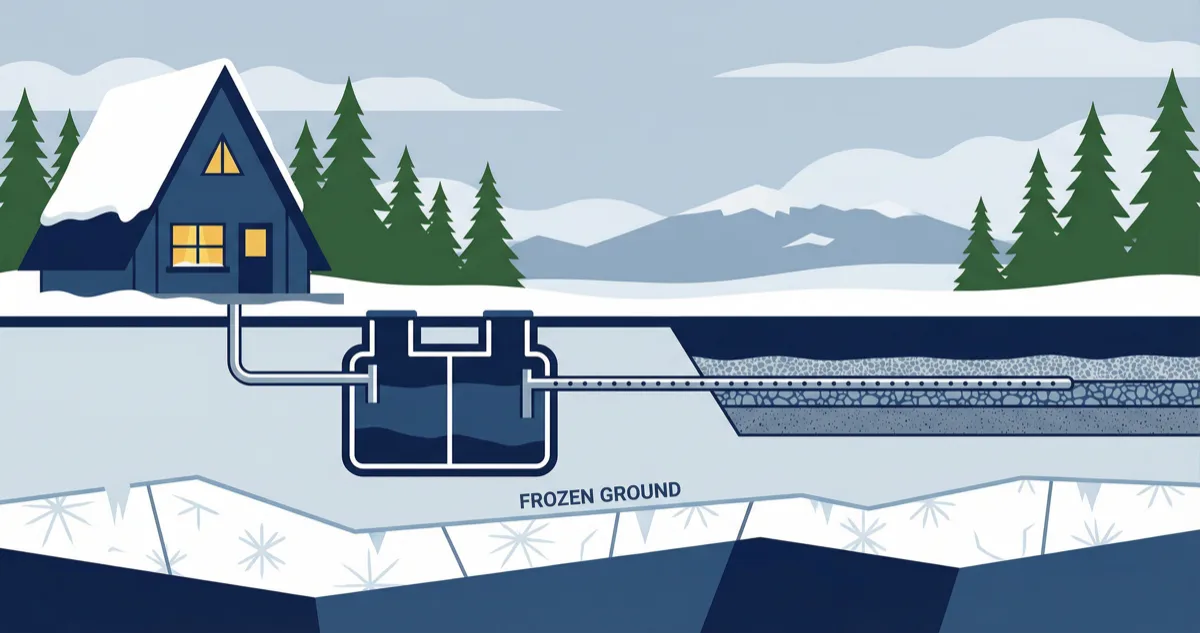
- Septic tank — A watertight underground container (typically 1,000 to 1,500 gallons for a residential system) that receives all wastewater from the home. Solids settle to the bottom as sludge, oils and grease float to the top as scum, and partially treated liquid (effluent) flows out to the drain field.
- Drain field (leach field) — A network of perforated pipes buried in gravel trenches where effluent percolates into the soil. Soil bacteria provide the final treatment, breaking down contaminants before the water reaches the water table.
The system relies on gravity, natural bacterial action, and the filtering capacity of the surrounding soil. When everything is working correctly, it’s a quiet, effective, and low-cost way to handle household wastewater.
Types of Septic Systems Used in Alaska
Not every type of septic system works in Alaska’s varied terrain and climate. Here are the systems most commonly installed across the state:
Conventional Gravity Systems
The standard system described above works well in areas with adequate soil drainage, sufficient lot size, and seasonal thaw depth that allows proper percolation. Conventional gravity systems are the most affordable to install and maintain when site conditions are favorable.
Best suited for: Well-drained soils in the Mat-Su Valley, parts of the Kenai Peninsula, and other areas without permafrost or high water tables.
Mound Systems
When the natural soil doesn’t drain well enough for a conventional drain field — due to clay, high water table, or shallow bedrock — a mound system raises the drain field above grade in an engineered sand and gravel mound. Effluent is pumped to the mound, where it filters through the constructed soil layers before reaching the natural ground.
Mound systems are more expensive than conventional systems but are a proven solution for challenging sites. They’re common in the Soldotna, Kenai, and Sterling areas of the Kenai Peninsula, where high water tables and variable soils are routine.
Cost premium: Typically $5,000 to $15,000 more than a conventional system due to additional materials and engineering.
Holding Tanks
In some locations — particularly where permafrost, small lot size, or sensitive environmental areas make drain fields impractical — a holding tank serves as a sealed wastewater storage container with no soil discharge. The tank must be pumped regularly (typically every few weeks to months depending on household size and tank capacity).
Holding tanks are the most expensive to operate long-term due to frequent pumping costs, but they may be the only permitted option in certain locations.
Pressure Distribution Systems
These systems use a pump to evenly distribute effluent throughout the drain field, improving treatment in areas where gravity alone doesn’t provide adequate coverage. They’re useful on sloped sites or where soil conditions require more controlled dosing.
Advanced Treatment Units (ATUs)
ATUs use mechanical aeration or other processes to treat wastewater to a higher standard before it reaches the drain field. They may be required in environmentally sensitive areas near water bodies, or where lot sizes are too small for a standard drain field.
ATUs have higher installation and maintenance costs and require regular service, but they can make building feasible on lots where a conventional system wouldn’t be approved.
Permafrost and Frozen Ground: Alaska’s Biggest Septic Challenge
Permafrost — permanently frozen ground — is the single most significant factor affecting septic system design in Alaska. Here’s why it matters:
- Drain fields don’t work in frozen ground — Effluent can’t percolate through permafrost. Systems in permafrost areas require either above-ground solutions (mound systems), holding tanks, or designs that maintain a thawed zone around the drain field.
- Active layer depth — In areas with discontinuous permafrost (common in Fairbanks and the Interior), the active layer — the ground that thaws each summer — may be deep enough for a conventional system. But system design must account for seasonal freezing and thawing.
- Thaw settlement — Warm effluent entering the ground near permafrost can cause localized thawing and ground settlement, potentially damaging the system or the home’s foundation.
- Seasonal limitations — Most septic installation happens between May and September when the ground is thawed enough to excavate. Winter installation is possible but significantly more expensive.
In Fairbanks and other Interior locations, a soil and permafrost assessment by a qualified engineer is essential before committing to any property purchase that requires a septic system.
DEC Permits: Alaska’s Septic Regulations
The Alaska Department of Environmental Conservation (DEC) regulates onsite wastewater systems across the state. Here’s what homeowners need to know about the permitting process:
When a Permit Is Required
- New septic system installations
- Major repairs or modifications to existing systems
- Replacing a failed system
- Connecting additional structures (like an accessory dwelling unit) to an existing system
The Permitting Process
- Site evaluation — A DEC-approved evaluator assesses the property, including soil type, percolation rate, groundwater depth, setback distances from wells and waterways, and lot size.
- System design — Based on the site evaluation, an engineer or qualified designer creates a system plan that meets DEC regulations.
- Permit application — Submit the design to DEC for review and approval. Processing times vary but typically take several weeks.
- Installation — A licensed installer builds the system according to the approved design.
- Final inspection — DEC or a designated inspector verifies the installation matches the approved plan.
Setback Requirements
DEC specifies minimum distances between septic system components and wells, property lines, waterways, and buildings. Typical requirements include:
- 100 feet from a drinking water well to the drain field
- 10 feet from a building to the septic tank
- 100 feet from surface water to the drain field
- Specific setbacks from property lines (varies by borough)
These setback requirements can limit where a system can be placed on smaller lots, which is worth investigating before purchasing a property.
Septic System Maintenance: Keeping Your System Healthy
A well-maintained septic system can last 25 to 40 years or more. Neglected systems can fail in under a decade. Here’s the maintenance schedule that keeps things running smoothly:
Pumping Schedule
- Every 3 to 5 years for a typical family of four with a 1,000-gallon tank
- More frequently for larger households, garbage disposal users, or smaller tanks
- Holding tanks require pumping every few weeks to a few months
Pumping costs in Alaska typically run $300 to $600 per visit, depending on location, accessibility, and tank size. Remote properties may pay more due to travel charges.
Annual Habits
- Inspect tank levels and look for signs of system stress (slow drains, wet spots over the drain field, odors)
- Check baffles and inlet/outlet tees during pumping
- Keep records of pumping dates and inspection findings
What Not to Put Down the Drain
Protecting your septic system means being mindful about what enters it:
- No grease or cooking oil — These clog drain field soil pores
- No wipes, diapers, or feminine products — Even “flushable” wipes don’t break down adequately
- Minimal harsh chemicals — Bleach, antibacterial soaps, and strong cleaners kill the beneficial bacteria your system depends on
- No paint, solvents, or motor oil — These contaminate groundwater and damage the system
Drain Field Care
- Don’t drive vehicles or heavy equipment over the drain field
- Don’t plant trees or deep-rooted shrubs near the drain field (roots infiltrate pipes)
- Don’t build structures, patios, or sheds over the drain field
- Direct roof runoff and surface water away from the drain field area
Winter Care for Alaska Septic Systems
Alaska’s winters demand extra attention to your septic system:
- Insulate exposed components — Ensure the tank and any above-ground pipes are insulated or buried below frost depth
- Maintain snow cover — Counterintuitively, a layer of snow over the drain field acts as insulation. Avoid plowing or packing snow over the drain field area
- Keep using the system — Regular use generates warm water that helps prevent freezing. If the home will be vacant for an extended period, consider having the system winterized by a professional
- Heat trace on pipes — In extreme cold areas, heat trace cable on the pipe from the house to the tank can prevent the most common freeze point
- Pump before freeze-up — Having the tank pumped in early fall gives you maximum capacity heading into winter, when pumping access may be limited
If your system does freeze, contact a septic professional immediately. Attempting to thaw components without proper equipment can cause damage.
Septic System Installation Costs in Alaska
New septic system installation in Alaska typically costs between $15,000 and $30,000, though complex sites can exceed that range. Here’s a general breakdown:
| Component | Typical Cost Range |
|---|---|
| Site evaluation and soil testing | $500–$1,500 |
| System design and engineering | $1,000–$3,000 |
| DEC permit fees | $200–$500 |
| Septic tank (installed) | $3,000–$6,000 |
| Conventional drain field | $5,000–$12,000 |
| Mound system drain field | $10,000–$20,000 |
| Pump and controls (if required) | $1,500–$3,500 |
| Advanced treatment unit | $8,000–$15,000 |
Costs are influenced by soil conditions, system type, distance from suppliers, site accessibility, and local labor availability. The Soldotna and Kenai area on the Kenai Peninsula has several experienced septic installers, which can help keep costs competitive compared to more remote locations.
Buying a Home with an Existing Septic System
If you’re purchasing a home with an existing septic system, protect yourself with these steps:
- Request maintenance records — Pumping history and any repair documentation
- Get a septic inspection — A qualified inspector can assess tank condition, check for leaks, evaluate the drain field, and estimate remaining useful life
- Ask about the system type and age — Older systems (20+ years) may be nearing replacement
- Check DEC records — Verify the system was permitted and installed according to approved plans
- Test the well water — Especially for coliform bacteria, which can indicate septic system leakage affecting groundwater
Lenders look at the system before closing. See well and septic mortgage requirements in Alaska.
For additional guidance on plumbing systems in Alaska homes, our plumbing guide for Alaska homes covers related topics. And if you need a qualified installer or inspector, our guide to finding a contractor in Alaska can help you vet the right professional.
Finance your home project with a HELOC or home equity loan from Premier Mortgage. Premier Mortgage | NMLS# 1168048 | Equal Housing Lender
Frequently Asked Questions
How often should I pump my septic tank in Alaska?
For most households (three to four people with a standard 1,000-gallon tank), pumping every three to five years is a good baseline. Larger families, homes with garbage disposals, or smaller tanks may need pumping every two to three years. Holding tanks without drain fields require much more frequent pumping — often every few weeks. Your septic service provider can recommend a schedule based on your specific usage and system size.
Can I install a septic system in permafrost areas?
It depends on the type and depth of permafrost. In areas with discontinuous permafrost (common around Fairbanks), the active layer that thaws seasonally may be deep enough for certain system types. Mound systems or holding tanks are often the best options where permafrost is present. A site-specific evaluation by a qualified engineer is essential — permafrost conditions can vary significantly even within a single property.
How do I prevent my septic system from freezing in winter?
The most effective strategies include maintaining regular use (warm water flow helps prevent freezing), ensuring pipes are buried below frost depth or equipped with heat trace cable, insulating exposed tank and pipe sections, and allowing natural snow cover to insulate the drain field. If the home will be unoccupied during winter, have a professional winterize the system. Never try to thaw a frozen system with an open flame or boiling water — call a septic professional.
What are the signs of a failing septic system?
Watch for slow-draining sinks and toilets (not caused by a simple clog), sewage odors inside the home or near the drain field, wet or soggy ground over the drain field area, unusually green or lush grass over the drain field (indicating effluent is surfacing), and sewage backup into the home. If you notice any of these signs, have the system inspected promptly. Catching problems early typically means less expensive repairs.
Do I need a perc test before buying land for a home with septic?
Yes, a percolation (perc) test is a critical step before purchasing any property where you’ll need a septic system. The test determines how quickly water drains through the soil, which dictates what type of system DEC will approve — or whether a standard system is feasible at all. Some properties fail perc testing entirely, which means your options may be limited to a holding tank or an advanced treatment unit. Always make land purchases contingent on satisfactory perc test results.
Finance Your Home Improvement Project
A HELOC or home equity loan from Premier Mortgage lets you tap your home's value to fund renovations, repairs, and upgrades at competitive rates.
Or call 9078411600
Disclaimer: This article is for informational purposes only and does not constitute financial, mortgage, legal, or tax advice. Interest rates, loan programs, eligibility requirements, and fees are subject to change without notice and may vary based on your individual circumstances. Alaska Home HQ is not a lender, broker, or financial institution. All loan applications are processed by Premier Mortgage (NMLS: 1168048). We may have a business relationship with Premier Mortgage and may receive compensation when you use their services through our links. Consult a licensed mortgage professional before making financial decisions. Terms of Service · Privacy Policy