Snow Removal & Property Maintenance in Alaska
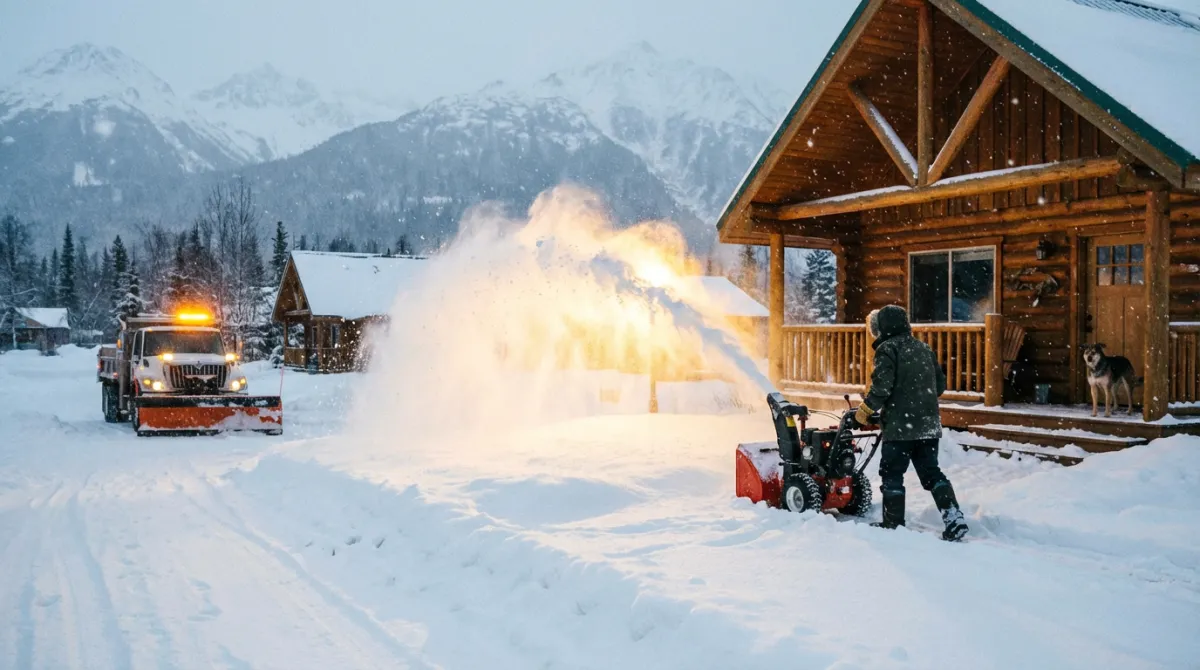
Snow is part of the deal in Alaska. Anchorage averages around 75 inches per year. Valdez regularly tops 300. Even in drier areas like Fairbanks, where annual snowfall is more moderate at around 65 inches, the snow that falls in October may still be on the ground in April — months of accumulation that never melts between storms.
Managing that snow isn’t optional. It affects your driveway, your walkways, your roof, your foundation drainage, and your overall property condition. And snow is only one piece of year-round exterior maintenance that Alaska homeowners need to stay on top of to protect their investment and keep things safe.
This guide covers the practical side: snow removal options and costs, roof load management, ice and walkway safety, municipal rules, equipment choices, and a maintenance schedule built for Alaska’s four very distinct seasons.
Snow Removal: Your Options
How you handle driveway and walkway snow removal depends on your property size, physical ability, budget, and how much snow your area gets.
Do It Yourself
For many Alaska homeowners, self-clearing is the default. It’s the most affordable approach, but it requires time, equipment, and physical effort — sometimes at 6 AM in the dark at -15F.
Equipment options:
- Snow shovel — The baseline. Ergonomic models with curved handles reduce back strain. Best for walkways, stairs, and light accumulation. Budget: $25–$60.
- Snow blower (single-stage) — Handles up to 8-10 inches of light-to-moderate snow on flat surfaces. Good for standard driveways. Budget: $300–$600.
- Snow blower (two-stage) — Handles deeper, heavier snow and throws it farther. Necessary if you regularly get 12+ inches per storm or deal with heavy, wet snow. Budget: $800–$2,000.
- Snow blower (three-stage) — The heavy hitter. Designed for the kind of snow Valdez, Thompson Pass, and other high-snowfall areas produce. Budget: $1,500–$3,000+.
- ATV/UTV with plow attachment — Popular in rural areas with long driveways. A 60-inch plow on an ATV handles most residential snow clearing. Budget: $300–$600 for the plow attachment (assumes you already have the ATV).
- Truck-mounted plow — For homeowners with larger properties, a plow on your pickup truck is common. Budget: $3,000–$6,000 for a quality plow system installed.
Hiring a Snow Removal Service
If you’d rather not deal with it yourself — or if physical limitations, travel, or a demanding schedule make self-clearing impractical — hiring a snow removal service is a straightforward solution.
What services typically offer:
- Per-push pricing — You pay each time they clear your driveway after a storm. Typical rates in Anchorage and the Mat-Su Valley range from $35–$75 per push for a standard two-car driveway, depending on accumulation and driveway length.
- Seasonal contracts — A flat fee for the entire winter season (typically October through April). Rates vary widely — $800–$2,500+ for a standard residential property, depending on location, driveway size, and average snowfall.
- Commercial/large property rates — Parking lots, multi-unit properties, and long rural driveways cost more. Get specific quotes.
What to look for in a service:
- Reliability — Snow doesn’t wait. A service that consistently clears by a set time (e.g., 7 AM before you leave for work) is worth a premium over one that shows up whenever they get around to it.
- Insurance — A plow truck or snow blower can damage driveways, landscaping, vehicles, and property. Make sure your service carries liability insurance.
- Clear terms — Know what triggers a clearing (e.g., 2+ inches of accumulation), whether they handle walkways and steps in addition to the driveway, and how ice events are billed.
Roof Snow Load Monitoring
Roof collapse from excessive snow load is a real risk in Alaska — not a theoretical one. It happens every winter, particularly on flat or low-slope commercial and residential roofs.
How Much Snow Is Too Much?
Roof snow load capacity varies by structure, but here are general guidelines:
- Most Alaska residential roofs are designed to handle 40-60 pounds per square foot (psf) of snow load, depending on the building code in effect when the home was built and the roof’s structural design.
- Fresh, dry snow weighs roughly 3-5 lbs per cubic foot. A foot of dry snow creates about 3-5 psf of load.
- Wet, settled snow weighs 15-25 lbs per cubic foot. A foot of old, compacted snow can create 15-25 psf.
- Ice weighs approximately 57 lbs per cubic foot. Ice dams and ice layers within the snowpack add significant weight.
A roof with 3 feet of settled, partially melted snow may be carrying 45-75 psf — potentially exceeding design capacity, especially on older structures.
Warning Signs
- Doors or windows that suddenly stick or won’t close properly
- Visible sagging in the roof line
- Cracking sounds from the roof structure
- Interior ceiling cracks appearing or expanding
- New water stains on interior ceilings (may indicate ice dam formation)
What to Do
- Don’t climb on the roof. Clearing a snow-loaded roof is dangerous. Use a roof rake (a long-handled tool that lets you pull snow off from the ground) to remove snow from the lower 3-4 feet of the roof edge.
- Hire a professional for heavy accumulation, particularly on steep or high roofs. Professional roof snow removal in Alaska typically costs $200–$600+ per clearing, depending on roof size, pitch, and accessibility.
- Prioritize flat and low-slope sections — these accumulate the most load because snow doesn’t slide off naturally.
- Keep an eye on valleys and areas where drifting occurs — wind can deposit disproportionate snow loads in specific spots.
For more on protecting your home through Alaska winters, see our winterizing guide.
Driveway and Walkway Maintenance
Beyond snow removal, keeping your driveways and walkways safe and functional through an Alaska winter requires ongoing attention.
Ice Management
Black ice on driveways and walkways is one of the most common causes of winter injuries in Alaska. Options for managing it:
- Sand or gravel — Provides traction without melting ice. The most common approach in Alaska because it works at any temperature, unlike chemical de-icers that become ineffective below certain thresholds. Budget: $5–$15 per 50-lb bag.
- Calcium chloride — Effective down to about -25F. Melts ice faster than rock salt and is less damaging to concrete. Budget: $15–$25 per 50-lb bag.
- Magnesium chloride — Works to about -15F. Considered less harmful to vegetation and concrete than other chemical options. Budget: $15–$30 per 50-lb bag.
- Rock salt (sodium chloride) — The cheapest option but only effective to about 15F, making it largely useless during the coldest months in Interior Alaska. Also damages concrete over time and is harmful to vegetation.
- Pet-safe de-icers — Urea-based or propylene glycol products that won’t harm pets’ paws. Typically effective to about 15-25F. Budget: $15–$30 per container.
At -30F and below — common in Fairbanks and the Interior — chemical de-icers largely stop working. Sand and gravel for traction become the primary tools, along with diligent shoveling and scraping.
Concrete and Asphalt Care
Freeze-thaw cycles are brutal on paved surfaces. Water seeps into cracks, freezes, expands, and widens the damage with every cycle. To minimize deterioration:
- Seal asphalt driveways every 2-3 years with a quality sealant
- Fill concrete cracks before winter with flexible, cold-weather-rated filler
- Avoid using rock salt on concrete — it accelerates spalling (surface flaking)
- Consider heated driveway systems for steep or heavily used areas (expensive to install but effective)
Municipal Snow Policies
Snow removal responsibilities and regulations vary by community. Here are the basics for major Alaska municipalities:
Anchorage
- The Municipality of Anchorage clears priority streets first, then residential neighborhoods. After a significant storm, residential streets may not be plowed for 24-48+ hours.
- Sidewalk responsibility: Property owners are responsible for clearing sidewalks adjacent to their property within 48 hours of snowfall ending.
- Snow placement: You may not push snow from your property onto public roads or neighboring properties.
- Parking during plowing: Move vehicles off the street during declared snow emergencies to allow plows through.
Fairbanks
- The Fairbanks North Star Borough maintains borough roads; the City of Fairbanks handles city streets.
- Response times vary based on road priority classification.
- Sidewalk clearing is the property owner’s responsibility in most areas.
Mat-Su Borough
- The borough maintains major roads. Subdivision roads may be maintained by the borough, a road service area, or a homeowners’ association — know which applies to your neighborhood.
- Rural properties with private driveways may have no public clearing whatsoever.
Rural Communities
In smaller communities and off-road-system villages, snow removal is often handled by the individual homeowner with minimal or no municipal support. This is one of the practical realities of rural Alaska living — budget for your own equipment and maintenance.
Year-Round Exterior Maintenance Schedule
Alaska’s property maintenance needs shift dramatically with the seasons. Here’s a practical calendar.
Spring (April–May)
- Inspect roof for winter damage — missing shingles, flashing issues, ice dam damage
- Clean gutters and downspouts once snow melts
- Check foundation for cracks from frost heave
- Grade landscaping so water drains away from the foundation
- Inspect siding and trim for damage from ice, snow, and moisture
- Service lawn and garden equipment — mowers, trimmers, etc.
- Schedule summer projects with contractors if not already booked
Summer (June–August)
- Complete exterior repairs — siding, roofing, painting, deck staining
- Maintain landscaping — mowing, drainage, trimming trees away from the house and power lines
- Inspect and maintain decks — re-stain or seal every 2-3 years
- Pressure wash exterior surfaces
- Check and clean dryer vents, exhaust fans, and HVAC components
- Assess driveway condition — seal asphalt, repair concrete, grade gravel driveways
Fall (September–October)
- Winterize exterior faucets and irrigation systems
- Clean gutters before freeze-up (leaves and debris from fall)
- Inspect and service heating system before winter
- Check weatherstripping on doors and windows
- Prepare snow removal equipment — service snow blower, stock sand/de-icer, inspect plow
- Trim trees that could drop branches onto your roof or power lines under snow load
- Store outdoor furniture, grills, and seasonal equipment
- Schedule septic pumping if due — it’s easier before the ground freezes
Winter (November–March)
- Snow removal — driveways, walkways, and steps after each storm
- Monitor roof snow load — especially after heavy or wet storms
- Clear snow away from foundation vents and the furnace/boiler exhaust
- Check for ice dams and address early
- Inspect heat trace systems periodically for proper function
- Keep walkways and stairs sanded/de-iced
- Watch for wildlife damage — moose can damage landscaping and fencing; voles and mice may access the home through gaps in the foundation or siding
If you’re new to Alaska homeownership, our guide to buying a house in Alaska covers what to expect from the maintenance perspective, and our Alaska home heating guide addresses one of the biggest ongoing costs you’ll manage.
The Cost of Neglect
Skipping property maintenance in Alaska has consequences that compound faster than in milder climates. A clogged gutter leads to ice dams. Ice dams lead to water intrusion. Water intrusion in a wall cavity at -20F leads to frozen pipes and structural damage. What started as a $50 gutter cleaning becomes a $5,000+ repair.
The same cascading logic applies to roof snow, driveway maintenance, foundation drainage, and every other system exposed to Alaska’s freeze-thaw cycles, heavy snow loads, and temperature extremes.
Staying ahead of maintenance is less expensive — and far less stressful — than emergency repairs in the middle of January.
Planning a major home project? A HELOC or home equity loan from Premier Mortgage can fund renovations, repairs, and upgrades at competitive rates. Premier Mortgage | NMLS# 1168048 | Equal Housing Lender
Frequently Asked Questions
How often should I have snow removed from my roof in Alaska?
The frequency depends on snowfall accumulation and your roof’s load rating. Most Alaska homes should have snow removed when accumulation exceeds 2–3 feet, or sooner if the roof is flat or low-pitched. Heavy wet snow weighs significantly more than dry powder, so pay attention to snow type as well as depth.
What does professional snow removal cost in Anchorage?
Residential snow removal in Anchorage typically ranges from $50 to $150 per visit for a standard driveway, depending on size and accumulation. Seasonal contracts — which cover unlimited visits through the winter — usually run $800 to $2,500 depending on property size. Roof snow removal is priced separately and tends to be higher due to the labor and risk involved.
Can I handle my own snow removal in Alaska, or do I need a pro?
Driveways and walkways are manageable for most homeowners with a quality snow blower or plow attachment. Roof snow removal, however, is dangerous and best left to professionals with proper equipment. Improper roof clearing can damage shingles, gutters, and flashing — or cause serious injury from falls.
When should I start winter property maintenance in Alaska?
Ideally, begin in late August or September before the first freeze. Prioritize furnace inspection, gutter cleaning, pipe insulation, and ensuring your snow removal plan is in place. Waiting until October or later risks being caught unprepared by early storms, which are common in Southcentral and Interior Alaska.
Does snow removal affect my Alaska homeowner’s insurance?
Neglecting snow and ice removal can affect claims if your insurer determines that damage — such as a roof collapse or ice dam leak — resulted from lack of maintenance. Keeping records of snow removal, either through a service provider or your own logs, demonstrates due diligence and supports your position in a claim.
Finance Your Home Improvement Project
A HELOC or home equity loan from Premier Mortgage lets you tap your home's value to fund renovations, repairs, and upgrades at competitive rates.
Or call 9078411600
Disclaimer: This article is for informational purposes only and does not constitute financial, mortgage, legal, or tax advice. Interest rates, loan programs, eligibility requirements, and fees are subject to change without notice and may vary based on your individual circumstances. Alaska Home HQ is not a lender, broker, or financial institution. All loan applications are processed by Premier Mortgage (NMLS: 1168048). We may have a business relationship with Premier Mortgage and may receive compensation when you use their services through our links. Consult a licensed mortgage professional before making financial decisions. Terms of Service · Privacy Policy