Landslide Hazard When Buying in Alaska
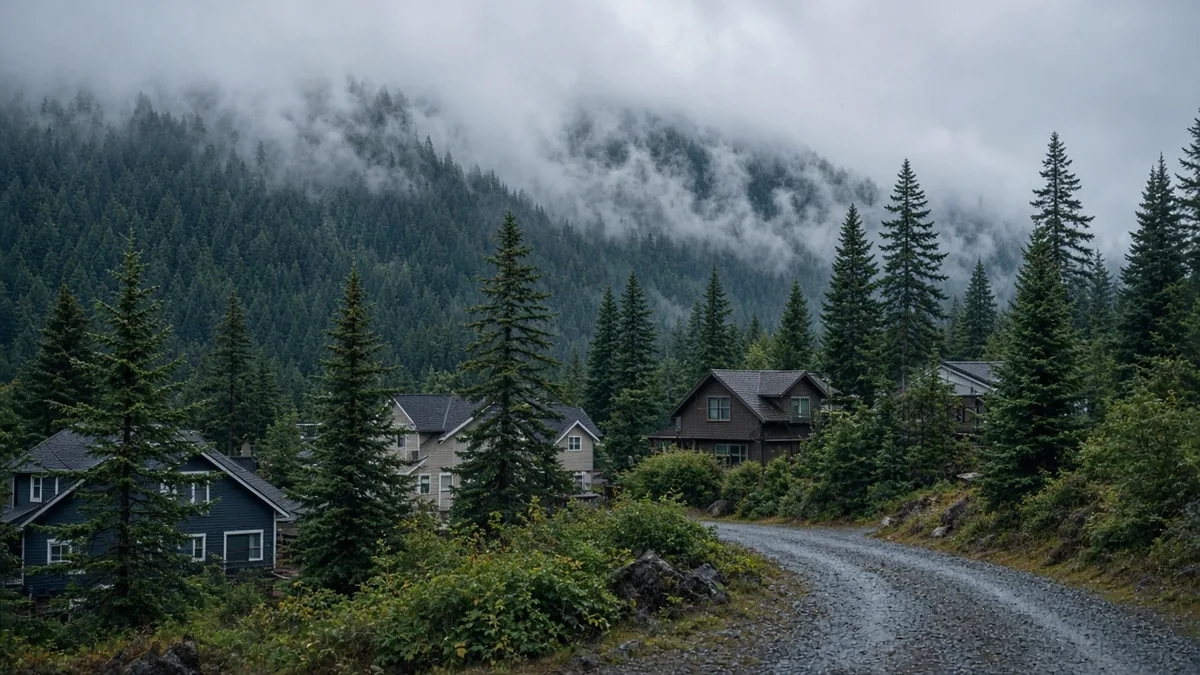
Alaska landslide hazard when buying is a question about the slope under and above a house, not a slogan on a disclosure. Steep terrain, heavy rain, glacial soils, thawing ground, and coastal bluffs all show up in different parts of the state. A national color on a map is a starting point. It is not a building permit, and it is not an ordinance number this article will invent. Borough and city rules differ. The parcel’s own hillside is the one you walk.
The U.S. Geological Survey publishes a landslide inventory and susceptibility map that includes Alaska. USGS describes susceptibility maps as planning tools. The same project notes that the model does not explicitly account for long-runout, and that it misses some landslides, so caution applies downslope of highly susceptible ground. A yellow or red pixel is a reason to look harder. An uncolored pixel is not a promise.
USGS also describes seismic landslide maps for Anchorage tied to the 1964 earthquake, when landslides were part of the damage. Southeast communities, including Juneau, have their own slope history. A house in town and a cabin under a timbered face are not the same hazard, and neither is “safe” because the listing omitted the word landslide.
Alaska Home HQ is educational. It is not a geologist, an insurer, or a lender.
How to read Alaska landslide hazard when buying
Start with the published map, then leave the screen. On the ground, look for scarps, cracks in the soil, trees with curved trunks, fresh debris, seeps that stay wet when the rest of the hill is not, a foundation that has shifted, doors that suddenly do not fit, and a retaining wall that is leaning. Those are clues, not a diagnosis. A geotechnical engineer is the person who studies a specific slope and says what it means for a foundation.
Ask the city or borough whether they publish a local hazard map or whether a slope review shows up when someone pulls a permit. Do not import a setback or a code section from a different municipality. Juneau, Anchorage, Sitka, Seward, and a Mat-Su hillside do not share one ordinance. If a planner cites a local code, read that code. This page will not guess the section number.
Read the seller’s disclosure for any mention of slides, settlement, drainage, or insurance claims. Ask the question even when the form is quiet. Disclosures are only as complete as the seller’s knowledge and the form they used. A walk with the inspector is the moment to point at the cut slope behind the deck.
A survey shows where the house sits relative to the toe and the top of the slope, and where the lot lines are. A deck that cantilevers toward a drop can be a lovely view and a future permit problem. The view is not the hazard report.
Nearby hazards that use different maps
A landslide is not a flood zone, even though both involve water and both scare lenders and insurers for different reasons. Flood insurance follows the flood map and the loan program. Earth movement is an insurance-form question of its own. Ask the agent to show you the earth-movement wording. Many homeowners policies exclude it. Some difference in coverage may be available as a separate discussion with the agent. A standard quote that does not mention the slope has not answered the question.
A coastal bluff that is eroding is related and not identical. The coastal bluff guide is the shoreline version: waves, thaw, and a house moving closer to the edge. A slide on an inland Juneau hillside may have nothing to do with a beach.
An avalanche path is a snow hazard. The avalanche-zone guide covers that map. A slope can be a slide risk in a rainstorm and an avalanche path in winter, or only one of those. Check both where the terrain warrants it. Girdwood, Turnagain, and parts of Southeast make the double question familiar. A flat river lot in the Interior makes it rare.
USGS has also published monitoring material on large slides such as Barry Arm in Prince William Sound, near Whittier. That is a fjord-scale hazard, not a template for a residential lot. The habit transfers: read the public science, then look at the ground in front of the house you might buy. The Juneau home buying guide is the city context for Southeast rain, steep lots, and older houses tucked into hillsides.
Insurance, permits, and resale
Ask, before you waive an inspection, whether a carrier will write a policy on that slope and what the policy does with earth movement. A loan that requires homeowners insurance can stall when the only quote excludes the hazard you are worried about, or when no quote appears at all. The lender’s required coverage is often about fire and, where the flood zone requires it, flood. Landslide coverage is frequently outside that required set. You can be insured for the loan and still be uninsured for the slope. That is a household risk, not a checkbox the lender solved.
Permits for a future addition, a new foundation, or a retaining wall may draw a slope review even when the current house is grandfathered in some informal sense. “Grandfathered” is a word neighbors use. The planning department is the place that confirms what a new permit would require. No statewide ordinance number belongs in this article because the rules are local.
Resale is the other price. A documented engineering letter, a mitigation project with permits, and a history of no movement are facts a later buyer can read. A verbal “it’s been fine since we bought it” is the fact pattern that shows up again. Keep the reports with the deed.
Appraisers can comment on external conditions and location. Value is what buyers pay for comparable houses, and comparables on a known slide path can be thin. This page does not invent a percent to knock off the price. The appraisal and the engineer’s letter are the documents. A beautiful view lot with a fresh scarp is allowed to appraise differently than a view lot without one.
The offer, the loan, and the season
Write the offer so you can walk if the slope homework fails, if your contract still has an inspection or document period. A cash waiver of every contingency is a choice for a buyer who can afford to own a problem. It is a poor default on a steep lot in a rain forest.
Pre-approval still comes before you fall in love with the view. The loan may be available, and the insurance or the engineering may be the item that changes the budget. Knowing the payment range first keeps the hillside from making the decision alone.
Season matters. Southeast rain in autumn, snowmelt in the Interior, and a dry week in July show different versions of the same seep. Visit after weather, not only on the sunny listing day. Look at the uphill neighbor’s drainage. A new roof on the next house uphill can point a lot of water at your foundation.
A Permanent Fund Dividend will not retain a hillside. It can be part of ordinary savings for closing costs on a house that has already passed the slope questions you care about.
Thinking about buying? Getting pre-approved helps you know your budget before you shop a hillside. Premier Mortgage (NMLS# 1168048) can walk through a purchase on a house that meets the program’s property and insurance rules.
A simple order of work
Pull the USGS map and any local map the borough will give you. Read the disclosure. Walk the slope in weather, not only in a photo. Ask an inspector to look at structure and drainage. Hire a geotechnical engineer when the map, the clues, or the permit office gives you a reason. Ask the insurance agent about earth movement in writing. Then decide whether the house in Juneau or on another Alaska hillside is the house to own.
That order is slower than a same-day offer. On this hazard, slower is the point.
Frequently Asked Questions
Does a USGS susceptibility color ban a mortgage?
No. The USGS map is a planning tool, and the project itself says the model misses some slides and does not fully treat long-runout. Lenders look at the program’s property rules and at whether required insurance is available. A color is a reason to investigate, not an automatic denial or an automatic approval.
Is there one Alaska ordinance that sets landslide rules for every town?
No. Cities and boroughs differ. This article does not cite an ordinance number. Ask the planning office for the parcel you are buying, and read the code they name. A rule from another municipality is not your rule.
Does homeowners insurance cover a landslide?
Often the standard policy excludes earth movement. Ask the agent to show you that language, and ask what, if anything, is available for this house. A policy that satisfies the lender’s fire or flood requirement can still exclude the slope.
How is a landslide different from a coastal bluff or an avalanche?
A bluff is shoreline erosion and retreat. An avalanche is a snow hazard with its own maps. A landslide is slope failure of rock and soil, sometimes in heavy rain or during shaking. One lot can face more than one of these. They are not the same form and not the same map.
When is a geotechnical engineer worth hiring?
When the susceptibility map, a visible scarp, a shifted foundation, a seep, or the permit office suggests the slope is part of the purchase decision. An inspector’s general home inspection does not replace that study. The engineer looks at the specific hill. The map looks at a region.
Ready to Make Your Move?
Get pre-approved for your home loan first — it gives you a competitive edge. Need a listing agent? We can help.
Or call 9078411600 · or email contact@akhomehq.com
Disclaimer: This article is for informational purposes only and does not constitute financial, mortgage, legal, or tax advice. Interest rates, loan programs, eligibility requirements, and fees are subject to change without notice and may vary based on your individual circumstances. Alaska Home HQ is not a lender, broker, or financial institution. All loan applications are processed by Premier Mortgage (NMLS: 1168048). We may have a business relationship with Premier Mortgage and may receive compensation when you use their services through our links. Consult a licensed mortgage professional before making financial decisions. Terms of Service · Privacy Policy