RS 2477 Rights of Way in Alaska
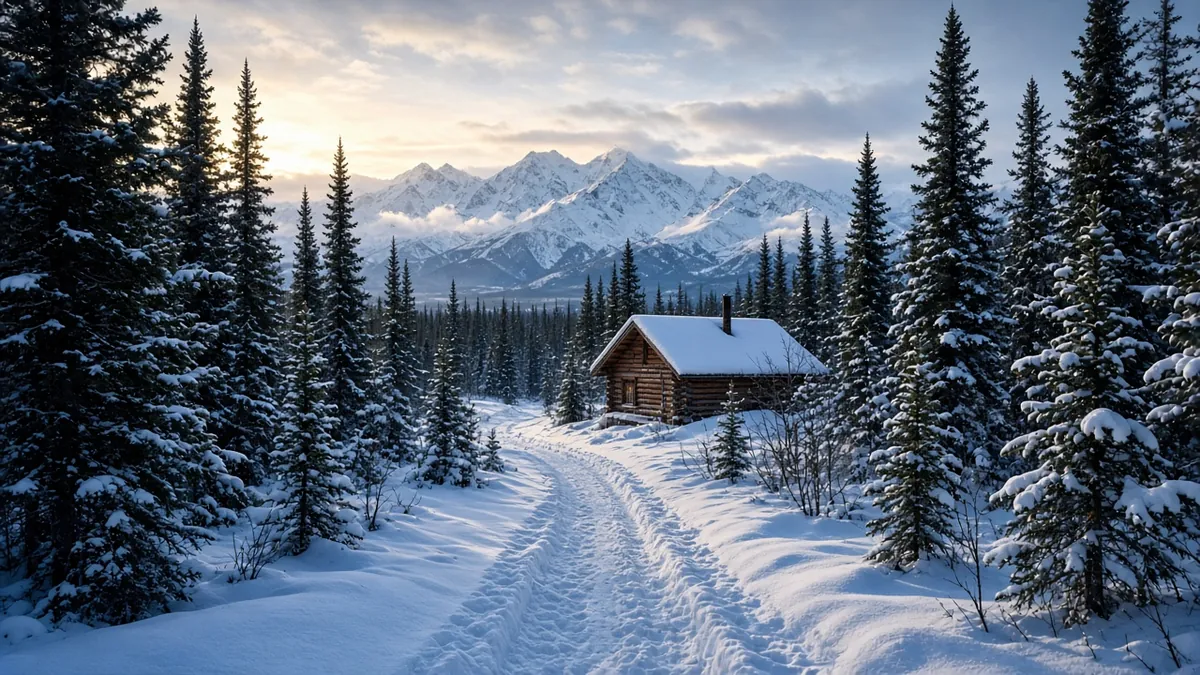
An Alaska RS 2477 right of way is a claim that the public accepted a travel route across unreserved federal land before Congress repealed that old right-of-way grant in 1976. The Alaska Department of Natural Resources says rights that already existed on the repeal date stayed in place. Plenty of named routes are still disputed. A line in a listing, or a tracking number in a state file, does not deed the access road to the buyer.
People run into this on remote parcels out of Palmer, in the Interior, and on the Kenai Peninsula. The ad may say “RS 2477 access” or “historic trail.” The truck that drove the route in July may not be the legal story. Breakup, a locked gate, and a neighbor who disagrees with the state are all ordinary parts of the same purchase.
Alaska Home HQ is educational. It is not a lender, a title company, or the Department of Natural Resources. Access that looks obvious on a Saturday drive can still show up as an exception on a title commitment.
What an Alaska RS 2477 right of way is
DNR’s trails program describes the old grant as a right of way for highways over public lands that were not reserved for public uses. “Highway,” in that history, was a broad word. It covered more than a paved road with a centerline. Foot trails, sled routes, and wagon tracks were the kind of travel the old law was written around.
DNR says the grant was self-executing. No federal paperwork had to issue for a route to arise, if the facts of acceptance were there while the land was still vacant, unreserved, and unappropriated. Acceptance, on DNR’s page, is either a clear act by the proper public authority or public use serious enough to show the grant was taken up. Spending public money on the route is evidence DNR cites. DNR also says that spending is not required.
The page says that if those facts were in place while the land was unreserved federal land, the right of way passed without a separate federal ceremony. Once accepted, DNR says the right stays even after the underlying land moves into other hands. That sentence is the state’s position. It is also why buyers, federal land managers, Native corporations, and private owners still argue about particular lines on a map.
Repeal in 1976 stopped new grants under that old statute. It did not, in DNR’s telling, wipe out rights already in existence. A route that nobody can document from the years when the land was still open federal land is a different case from a route the state has researched. Both can appear in a listing in the same casual way.
An RST number is a file, and claims stay disputed
DNR says it has researched more than 2,500 routes and has determined that more than 650 qualify. Those are the department’s research figures, published on the trails program page. They are not a statement that every historic track in Alaska is a public road, and they are not a deed in the buyer’s pocket.
The department tracks research with an RST number and a file. DNR says a route that has an RST number is not, for that reason alone, a valid right of way. The number is for tracking. A seller who quotes an RST number has quoted a file label. Ask DNR what the file actually holds, and ask the title company what the commitment will insure.
DNR’s page says typical documentation is the kind of record that dates from before January 17, 1969, or from the time the land was otherwise still unreserved federal land. The list on that page includes Geological Survey notes and maps, aerial images, Alaska Road Commission reports, postal contracts, territorial or state spending records, older publications, personal-use accounts, and land title records from that era. A family story that “everyone used the trail” may matter to an investigator. It is not, by itself, the title exception a lender reads.
DNR also says its funding for this work has risen and fallen since 1993, and that time-sensitive access problems are a reason to talk with a private attorney. The department prioritizes investigations case by case. A closing date in Palmer does not move a research file to the front of the line.
For a question about a named route, DNR lists the Public Information Center at 550 W. 7th Ave, Suite 1360, Anchorage, (907) 269-8400.
The buyer does not own the access road
This is the point listings blur. If a right of way is valid, DNR describes a public right to use the route within the scope of that grant. The public does not, on DNR’s page, get to exceed that use. The person who holds the land under the route may use that land, and may not interfere with reasonable use of the right of way. Reasonable use, in the department’s words, is measured against the traditional uses of the route.
None of that language puts the road into the buyer’s name. Buying the parcel under the route does not make the buyer the private owner of a public right of way. Buying a back parcel that is reached by crossing someone else’s land does not make the buyer the owner of the neighbor’s ground. A gate, a “no trespassing” sign, or a fresh gravel spur can sit on top of a dispute. The purchase contract does not settle it.
Use outside the route can be trespass on private land, or a violation of the rules that apply on public land. DNR also says federal land managers may regulate a right of way in line with the rules of that federal jurisdiction. A weekend plan to widen a cat trail into a two-lane driveway is a maintenance and authorization question. DNR says many maintenance activities need authorization from DNR or the Department of Transportation.
So the honest sentence at the kitchen table is narrow. The buyer may be purchasing land that is reached by a route the state asserts, that a neighbor disputes, or that nobody has researched. The buyer is not purchasing ownership of the access road.
Other access theories that are easy to mix up
An Alaska RS 2477 right of way is not a section-line easement. Section-line access is a different body of law, tied to how some surveys were laid out. A section line on a plat can be vacant of any RST file, and an RST route can wander far from a section line. Read both. Do not treat them as nicknames for the same trail.
It is also not a prescriptive easement. Prescription is a claim built from use over time under state property law, often in a lawsuit. It does not start with an RST number. A seller may use both phrases in one remark. They are separate proofs.
A recorded private easement, and a private-road maintenance agreement, are contracts and deed language among owners. They can tell a lender who pays for gravel and plowing. They do not create a historic federal grant, and a historic grant does not fill in a maintenance agreement the underwriter asked for.
ANCSA 17(b) easements are another file entirely, reserved in corporation conveyances. They are not RST routes. If the commitment mentions both, they get separate questions.
What title and a loan look at
The title commitment is the document that matters at closing. Read every access exception in plain language. An exception that mentions public rights, a named trail, or an RST file is a disclosure of what the policy is not quietly insuring as a clean private driveway. Ask the title officer what access, if any, the policy will affirmatively insure.
A survey is the other picture. The route the seller drove may not be the route in the RST file. The route in the file may not be the route a truck can use after the ground thaws. Stakes, a gate, and a creek crossing belong on the survey conversation before the earnest money goes hard.
Lenders who need legal access may pause a file when the only story is a disputed historic claim. Some loans still close where a maintained public road or a recorded easement reaches the parcel and the historic trail is a side issue. A parcel whose only physical access is a contested track can stall even when the borrower’s income is fine. The lender, not a blog, says which programs will look at that commitment.
A rural property buying guide walks the broader remote-parcel checklist. Pair it with the commitment, not instead of the commitment.
Season is part of the inspection. A snowmachine trail in March and a flooded muskeg in breakup can be the same line on a map. If the household needs year-round vehicle access, the summer drive is the one that counts, and that drive is not a title policy.
Thinking about buying? Getting pre-approved helps you know your budget before you fall in love with a parcel at the end of a trail. Premier Mortgage (NMLS# 1168048) can look at a purchase once title describes the access.
A buyer who wants acreage behind Palmer can still buy it when the access the family needs is the access the commitment and the survey describe.
Frequently Asked Questions
Does an RS 2477 note in the listing mean the buyer owns the road?
No. DNR describes a valid route as a public right of use within the scope of the old grant. The underlying landowner may use the land and may not interfere with reasonable public use. Neither role is a deed that hands the buyer private ownership of the access road.
Is an RST number proof the trail is a public right of way?
DNR says the RST number is a tracking label for a research file. The department also says a numbered route is not automatically valid. Ask what determination, if any, is in that file, and ask title what the commitment will insure.
Can the neighbor lock a gate across a claimed route?
A gate on a disputed route is a dispute, not a driveway warranty. DNR’s page says an underlying owner may not interfere with reasonable use of a valid right of way, and it also says many claims are still a research matter. A locked gate is a reason to call DNR and an attorney before you rely on the route for a loan.
Will a lender close if access is only a historic trail claim?
Sometimes the commitment shows a different, insurable access, and the trail is incidental. When the only physical access is a contested claim, the lender and the title insurer may not treat that as legal access. Income approval does not replace the access exception.
Who do I call about a specific route?
DNR’s trails program lists the Public Information Center at 550 W. 7th Ave, Suite 1360, Anchorage, (907) 269-8400. The same page says time-sensitive access problems are a reason to hire a private attorney, because state investigations are prioritized case by case.
Ready to Make Your Move?
Get pre-approved for your home loan first — it gives you a competitive edge. Need a listing agent? We can help.
Or call 9078411600 · or email contact@akhomehq.com
Disclaimer: This article is for informational purposes only and does not constitute financial, mortgage, legal, or tax advice. Interest rates, loan programs, eligibility requirements, and fees are subject to change without notice and may vary based on your individual circumstances. Alaska Home HQ is not a lender, broker, or financial institution. All loan applications are processed by Premier Mortgage (NMLS: 1168048). We may have a business relationship with Premier Mortgage and may receive compensation when you use their services through our links. Consult a licensed mortgage professional before making financial decisions. Terms of Service · Privacy Policy