Selling a Cabin in Alaska
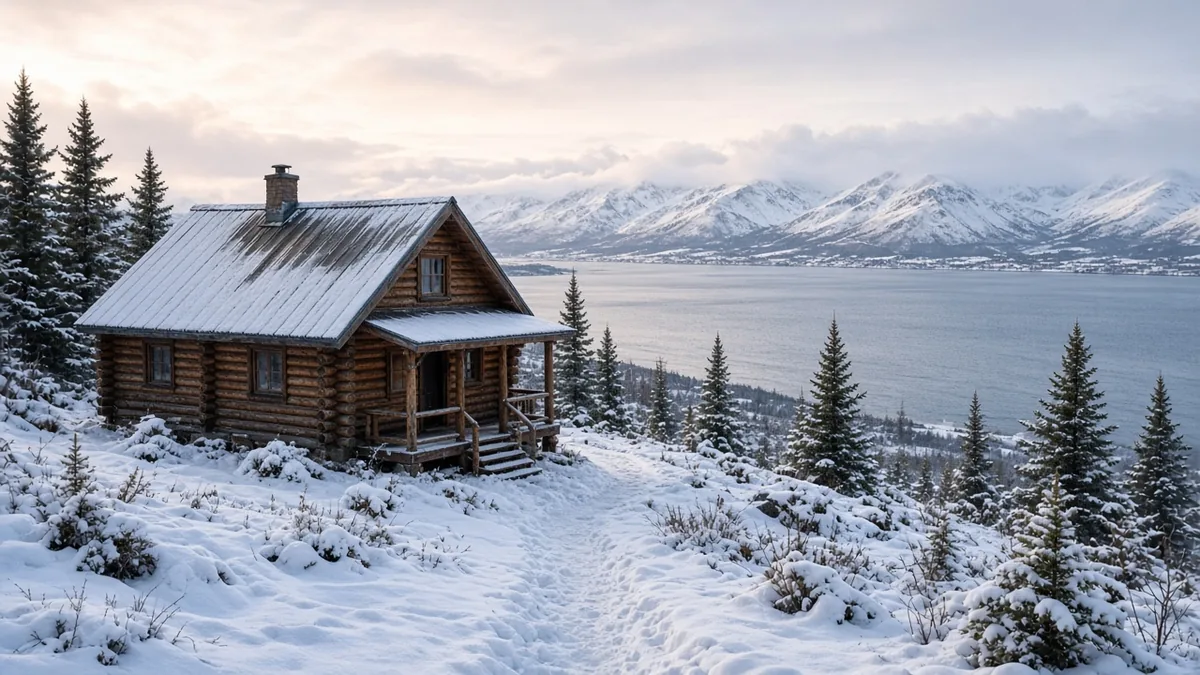
Selling a cabin in Alaska is a different job from selling a subdivision house. The buyers are fewer, the comparable sales are thinner, and the way someone reaches the cabin may matter more than the countertops. Owners who live out of state feel that most sharply, because they cannot walk the trail on a Tuesday when a buyer asks whether the four-wheeler crossing is still there after breakup.
Alaska Home HQ is educational. It is not a brokerage and it is not a title company. The buyer’s side of this purchase is the how to buy a cabin page. A for-sale-by-owner checklist is a different article and is not repeated here. This page is the seller’s problem: access, winter, and a price that survives a thin market.
Selling a cabin in Alaska when you do not live there
Name the access in the first paragraph of the listing, in words a stranger can follow. Road to the door, road then trail, boat only, fly-in, or winter-only. A photo of a truck at the cabin in July does not disclose a crossing that disappears in August. If a private road or a shared trail is the only way in, the maintenance agreement is part of what you are selling. The private road agreement page is what a buyer’s lender reads when the road is not public. You do not have to become the lender. You do have to produce the agreement if it exists, and you have to say so if it does not.
Out-of-state owners need a person on the ground. That can be an agent, a caretaker, or a neighbor with clear instructions. Buyers will ask for a showing when the weather is good, which may not be the week you can fly. A cabin that can only be shown with three days’ notice will lose buyers to a cabin that can be shown on Saturday. Plan the access, the key, and who meets the buyer, before the listing goes up. Remote closings have their own mechanics on the remote closing page. Signing from another state is possible and it is not instant. Build the notary and the mail into the closing date.
Homer, the Kenai Peninsula, and the road-accessible Interior are different showing markets from a fly-in lake. Do not borrow a showing plan from a city listing. If the buyer has to cross ice, say which months that is realistic. If the buyer has to land a small plane, say who maintains the strip. A surprise at the first showing becomes a price cut later, after the listing has already looked stale.
Thin comps and an honest price
Cabins do not comp like tract houses. A sale five years ago on a different lake, with different access, is a story, not a comparable. The Alaska Department of Labor’s 2021 averages, published with AHFC in Alaska Economic Trends, already showed Juneau’s average single-family sale at $475,780 and the Fairbanks North Star Borough at $313,802. Those are borough housing markets, not cabin markets, and they are not 2026 list prices. They are a warning against using the wrong map. A Homer cabin and a Fairbanks dry cabin are not one average. Your price comes from the few sales that share your access and your condition, and from the buyers who are actually looking this season.
The cabin square footage page explains how an appraiser measures a cabin when the buyer needs a loan. Lofts, arctic entries, and unfinished rooms get treated in specific ways. If you advertise a square footage that an appraiser will not count, the buyer’s loan comes in short and your sale renegotiates in public. Measure the way the buyer’s appraisal will measure, or describe the space in words instead of a number you cannot support.
Condition on a cabin is the heat source, the water, the waste, the roof, and the foundation, in that order of buyer questions. A city punch-list about outlet covers is not the list. Disclosure of what you know still applies. The seller disclosure page is the framework. “Cabin, sold as is” does not erase a known failed stove or a trail easement you have been using without a recorded right. Price the cabin that exists in March, not the cabin in the July photos only.
Winter showings and stale listings
Winter is when out-of-state owners hope to sell and when the fewest buyers can get there. A listing that goes live in November needs photos taken when the access looks like November, plus the summer photos. Buyers who only see August will feel misled in February, and they will either walk or demand a cut. A listing that waits for May may be the better sale, if you can carry the cabin through another winter. That is a holding-cost decision, including heat-tape, caretaker, and insurance, not a character flaw.
If showings produce the same objection twice, fix the price or fix the objection. The usual objections are access, heat, and “the square footage is not what the ad said.” None of those is solved by a new drone photo. A price reduction on a cabin should be large enough to be a different listing in the buyer’s mind. A token cut on a remote property just restarts the clock.
Personal property is a cabin trap. Generators, boats, and tools walk away unless the contract lists them. What conveys, and what the seller is flying home, belongs in the purchase agreement. A buyer financing the cabin cannot borrow the generator’s value if the generator is not part of the real estate in a way the appraiser will include. Say what stays.
Paper you can gather before the first call
Deed and the legal description. Any road or trail agreement. The last survey, even if it is old. Utility or generator facts. Water and waste, described accurately, including hauled water or an outhouse if that is the truth. A contact who can open the cabin. Your own notes on known leaks, ice damage, and access closures. A buyer’s lender will ask for some of this anyway. Having it shortens the only part of a remote sale you can actually control, which is how fast you answer.
Alaska does not levy a state personal income tax. A cabin sale can still be a federal tax event, and a recreational cabin often does not qualify for the federal exclusion aimed at a primary residence. A tax preparer applies those rules to your facts. This page does not. Do not set the price by the tax you hope to avoid.
Buyers who need a loan should know their budget before they ask you to hold a remote inspection window. Rates vary and are subject to credit approval. Premier Mortgage (NMLS# 1168048) can walk through pre-approval. If you want help listing the cabin, email contact@akhomehq.com or use the contact form.
Frequently Asked Questions
How do I price a remote Alaska cabin with almost no comps?
Use the closest sales that share your kind of access and your condition, and discount stories from a different lake or a different decade. Borough-wide averages, including the 2021 figures from the Department of Labor, describe city and town housing, not your trail. If a buyer will need an appraisal, describe square footage the way that appraisal will measure it. A number the appraiser will not support becomes a renegotiation.
Can I sell an Alaska cabin while I live outside the state?
Yes. You need someone who can show the cabin, a way to sign, and honest access language. Remote closings can be done from another state and still need a notary plan and time for documents to move. Set the key, the guide, and the winter rules before the ad is published, or a listing that waits on your visits will sit.
Do winter photos help or hurt a cabin listing?
They help if they show the access and the cabin as a buyer will find them in the months you are actually showing. July photos alone create a fight later. If you cannot show the cabin safely until the road or the ice is in, say so, and consider whether a spring listing is the real plan. A winter listing with no showing path is a stale listing with extra steps.
What access documents does a cabin seller need?
The deed, any recorded easement, and any private-road or trail maintenance agreement. If the only access is a neighbor’s permission with no paper, say that plainly. A buyer’s lender may refuse a loan without a recorded right of access. You can still sell to a cash buyer who accepts that, and you cannot fix it by leaving it out of the listing.
Does “as is” cover a cabin’s heat and water problems?
It tells the buyer you do not plan to do repairs. It does not replace a disclosure of facts you already know, and it does not force an appraiser to ignore a heat system that is not really there. Describe the stove, the water, and the waste accurately, then price the cabin that matches the description. The buyer’s checklist is the other side of this sale, and it will ask the same questions your listing should have answered.
Ready to Make Your Move?
Get pre-approved for your home loan first — it gives you a competitive edge. Need a listing agent? We can help.
Or call 9078411600 · or email contact@akhomehq.com
Disclaimer: This article is for informational purposes only and does not constitute financial, mortgage, legal, or tax advice. Interest rates, loan programs, eligibility requirements, and fees are subject to change without notice and may vary based on your individual circumstances. Alaska Home HQ is not a lender, broker, or financial institution. All loan applications are processed by Premier Mortgage (NMLS: 1168048). We may have a business relationship with Premier Mortgage and may receive compensation when you use their services through our links. Consult a licensed mortgage professional before making financial decisions. Terms of Service · Privacy Policy