Artesian Well Rules on an Alaska Mortgage
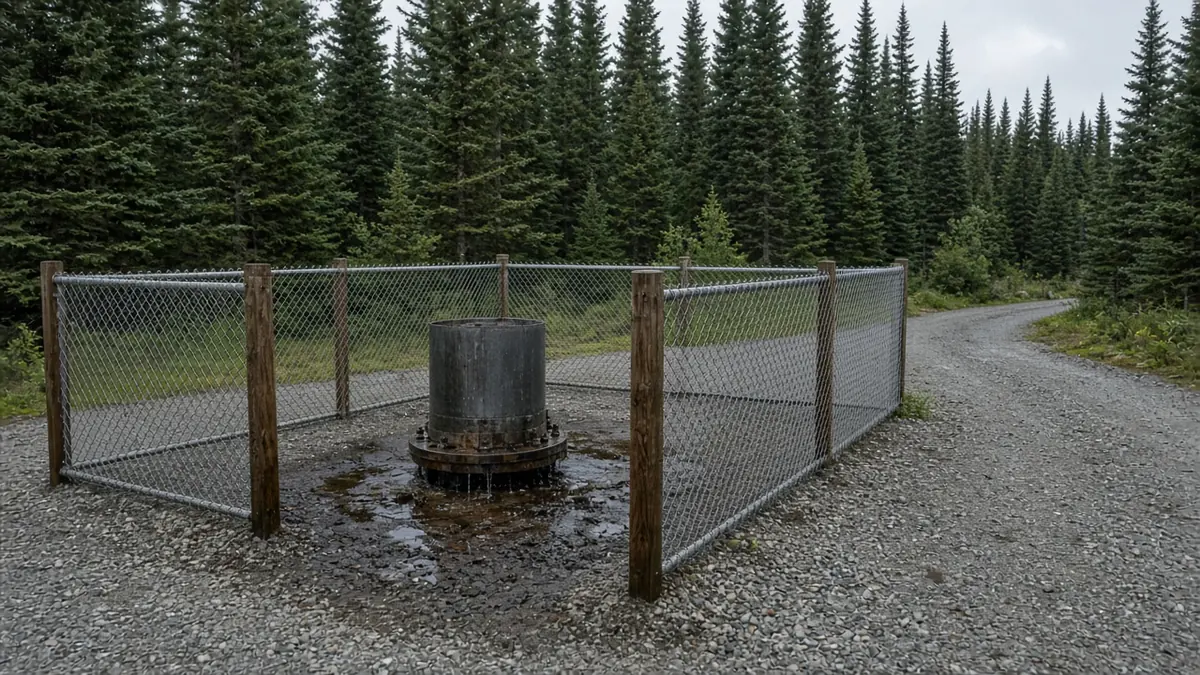
An artesian well on an Alaska mortgage is a well drilled into a confined aquifer, where pressure pushes water up the casing. Sometimes it flows at the surface without a pump. A sand-point well is a different tool, a shallow pipe driven into the ground. A spring is not a well at all. It is water that comes out of the ground on its own. Listing language lumps the three together. Loan files should not.
Alaska Home HQ is educational. It is not a lender and it is not the Department of Environmental Conservation. Subject to credit approval. This page does not state a distance between a well and a septic system. Contaminant testing for arsenic, PFAS, or uranium is a different report. A water-right certificate is a different document, on the domestic water right page only if that paper is the actual question. The town of Sand Point is not a sand-point well. Roof catchment is the rainwater catchment page.
An artesian well on an Alaska mortgage
The U.S. Geological Survey describes artesian conditions as water in a confined aquifer under enough pressure to rise above the top of the aquifer, and sometimes to flow at the ground. A flowing well can be the house supply on the Kenai Peninsula, in parts of the Mat-Su, and in other basins where the geology stacks that way. The mortgage question is not the geology word. It is whether the house has a continuous, potable supply that the health authority accepts, and whether the wellhead is built so surface water does not run down the casing.
HUD Handbook 4000.1 expects an individual water supply to meet the water-quality rules of the health authority that has jurisdiction. Older HUD field checklists, from handbooks that predate the current single-family handbook, sometimes listed springs, sand-point wells, and artesian wells among sources that were not acceptable on their face. That older wording is why buyers hear that an artesian well “cannot be financed.” The name on the listing is not the decision. The decision is the handbook section the lender is using today, plus the health authority’s letter, plus any investor overlay. Confirm those three before anyone calls the well ineligible.
A shared well, with a recorded agreement and more than one house on the same casing, is a different structure. The shared well agreement page is that file. A single artesian well on the parcel being sold is this page.
Three supplies that get the same nickname
An artesian well has a casing, a confined source, and pressure. It may or may not flow at the surface all year. A pump can still be part of the system if the pressure does not reach the fixtures, or if the owner throttles the flow and uses a tank. The appraiser and the inspector should say whether water arrives at the fixtures without someone hauling it, and whether the wellhead is sealed and protected. A flowing casing in a muddy pit is a maintenance problem even when the aquifer is generous.
A sand-point, sometimes called a driven point, is a small-diameter pipe with a screen, driven into shallow material. It can be a real supply in the right gravel, and a seasonal disappointment in the wrong one. It is not made eligible or ineligible by being called a well in the listing. The same three readers apply: the current program rule, the health authority, and the lender’s overlay. Quantity through a dry August matters as much as a lab bottle taken in June.
A spring is groundwater that has already reached daylight. A spring box can be built to collect it. Older field guidance treated surface springs as a different and harder case than a drilled well, because surface water and shallow water mix more easily. That history is a reason to document the collection, the box, and the treatment, not a reason to skip the health authority. If the program rule for the loan you are using still sets springs aside, the lender should say so by citing the section, not by repeating a forum post.
What the appraisal can see, and what it cannot
The appraiser reports the water source and whether the house has water. The appraisal process is a property visit, not a hydrologic study. Handbook 4000.1 tells the appraiser to call out mechanical systems that do not function. A dry faucet is a condition. A flowing well that the appraiser does not taste-test is not a certificate of potability. The health authority or a laboratory does that part, under whatever standard applies locally. This page does not restate those standards and does not convert a federal well rule into a DEC rule.
On the Kenai Peninsula, a flowing well can run all winter and ice the wellhead if the discharge is unmanaged. That is an operating problem. It is also a photo the appraiser may take. A buyer who has not stood at the casing in breakup is relying on a seller’s description of “artesian, never quits.” Ask for the well log if one was filed, the pump or control equipment, and any letter the health authority has already written. A log names the construction. It does not, by itself, clear the loan.
Insurers sometimes ask what the water source is. The answer “artesian” should be followed by whether the house is served year-round. A cabin that uses the flow in summer and hauls water in January is a part-time supply. Say so in the contract. The loan is on the house as it will be occupied.
How to keep the three systems from killing a good file
Use the specific name in the purchase contract and in the appraisal order. “Private well” is too vague when the seller means a flowing artesian well, a driven sand-point, or a spring box. The underwriter cannot apply a program rule to a nickname.
Order the health-authority or lab letter during the inspection period, not after the appraisal comes back subject to water. If the lender’s overlay wants a drilled well with a particular construction and this well is something else, you will learn it while you can still negotiate or walk. If the overlay accepts the flowing well once potability and a sanitary wellhead are documented, you will learn that too, and the forum post was wrong.
The FHA property standards checklist is the broad habitability list for that program. Conventional and VA files use their own guides. A well that one program will take can be a problem for another. That is a program difference, not a moral judgment about artesian water.
Rates vary and are subject to credit approval. Premier Mortgage (NMLS# 1168048) can look at the water source beside the rest of the file and tell you which program rule is actually being applied.
Frequently Asked Questions
Are artesian wells ineligible for an Alaska mortgage?
Not by the name alone. Older HUD field material sometimes listed artesian wells, sand-point wells, and springs as unacceptable on their face. The current decision is the handbook section the lender is using, the health authority’s acceptance of the water, and any investor overlay. Ask the lender to name the section before you treat a flowing well as a dead listing.
What is the difference between an artesian well and a sand-point?
An artesian well taps a confined aquifer under pressure and may flow at the surface. A sand-point is a shallow driven pipe with a screen, and a spring is water already at the surface, sometimes collected in a box. Listings call all three “well water.” The loan file should say which one serves the house.
Does a flowing well prove the water is safe to drink?
No, Flow shows quantity and pressure, not bacteria or chemistry. The health authority with jurisdiction, or a laboratory under that authority’s standard, is the water-quality step. The appraiser sees whether fixtures have water. A strong flow does not close the lab question.
Can a spring box be the water source on a purchase loan?
Sometimes, and sometimes the program rule sets springs aside. Older field guidance treated springs as harder to accept than a drilled well. The lender has to apply the section it is actually using, and the health authority has to accept the collection and any treatment. Bring the construction photos and any existing letter to the lender before you waive the inspection period.
Does an artesian well need a water-rights filing to close?
Water rights are a different document from a potability letter, and they are not decided on this page. Some supplies have a filing, and some older household wells are discussed under a different set of rules. If the title report or the lender asks for a water-right document, that request is its own condition. A flowing casing does not answer it.
Ready to Take the Next Step?
Get a free home loan quote today through our trusted partner.
Or call 9078411600
Disclaimer: This article is for informational purposes only and does not constitute financial, mortgage, legal, or tax advice. Interest rates, loan programs, eligibility requirements, and fees are subject to change without notice and may vary based on your individual circumstances. Alaska Home HQ is not a lender, broker, or financial institution. All loan applications are processed by Premier Mortgage (NMLS: 1168048). We may have a business relationship with Premier Mortgage and may receive compensation when you use their services through our links. Consult a licensed mortgage professional before making financial decisions. Terms of Service · Privacy Policy