Crawlspace Groundwater Mortgage Alaska
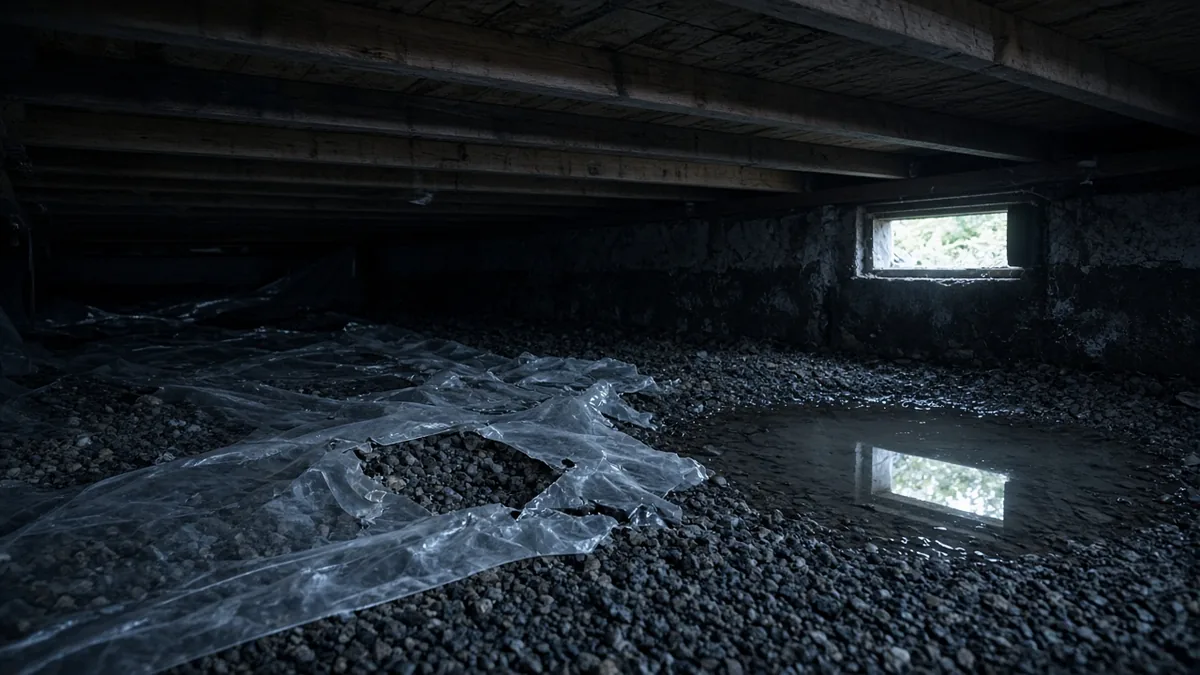
A crawlspace groundwater mortgage Alaska file starts when someone opens the hatch and finds standing water, wet insulation hanging from the joists, or a vapor barrier that is torn, missing, or floating. The ground under many Alaska houses is not a slab. It is a crawl, and the loan cares whether that crawl is dry enough that the structure and the mechanicals are not sitting in water. This is not slab frost heave. It is not a foundation that jacked a concrete floor.
Alaska Home HQ is educational. It is not a lender or a foundation contractor. Subject to credit approval. Frost, permafrost, and slab movement are the permafrost foundation page. A short cripple wall with its own bracing problems is the cripple wall page. This page is standing water and a failed ground cover, the condition that shows up under houses in wet ground such as parts of Soldotna.
When crawlspace groundwater mortgage Alaska reports get conditioned
HUD Handbook 4000.1 tells the appraiser to report conditions that affect the soundness of the property, including standing water and damage the appraiser can see. A crawl with a pond under the vapor barrier, or with no plastic at all and wet soil against the piers, draws a comment. The handbook does not set a depth of water that is “acceptable,” and this page will not invent one. The photo and the sentence on the report are the condition. “Damp soil” and “standing water against the girder” are different sentences. Ask the inspector to use one of them on purpose.
The home inspection checklist is usually the first document. Inspectors on the Kenai Peninsula see this at breakup, when the ground is still frozen underneath and melt has nowhere to go, and again in the fall rains. A visit in a dry week in midsummer can miss what March shows. If the seller says the crawl “only gets wet in the spring,” that sentence belongs in the disclosure, and a buyer who can only inspect in the dry week should say what was not observed. A loan that closes on a dry-day photo may still be a wet crawl after the next thaw. The file can only condition what someone documented.
A vapor barrier is the plastic on the ground, lapped and weighted so soil moisture is not open to the joists. Tears, gaps at the piers, and plastic that has floated into a pile in the center are a failed barrier even when the water is not deep. Insulation that has wicked water and collapsed is a second defect in the same hole. The insulation guide covers how houses are insulated. It does not clear a wet crawl. Replace wet insulation after the water is handled, or the new batts become the next inspection’s photo.
What a repair letter has to say
Standing water has a source, and the letter should name the one the contractor actually found. Groundwater seeping through the ground, surface water running under the sill because the grade slopes in, a disconnected downspout, and a plumbing leak can look the same in a flashlight beam. A sump pump answers one of those. Regrading answers another. A plumber answers a third. A bid that says “dry out crawlspace” without a cause will not satisfy an appraiser who asked for the water to be corrected.
The closeout is a return visit, not a receipt. Photos after the plastic is down, continuous, and on the soil rather than on a puddle, plus a note that no standing water was present on that date, are the package. If a sump was installed, say where it discharges. A pump that dumps against the foundation is a circle. If the work can only be proven in a wet season, say that the dry-season photo is incomplete and what monitoring was agreed. Some files close on the repair and a contractor’s warranty. Some underwriters want the appraiser back. The condition’s wording picks which one.
Mechanical equipment in the wet crawl is part of the same visit. A furnace, a water heater, or a boiler sitting in a shallow pond is a mechanical condition stacked on a moisture condition. The heat has to function, and the appliance has to be one a contractor is willing to leave in service. Elevate or replace as the bid says. Do not write a moisture letter that ignores a rusted burner sitting in the water.
Insurance, odor, and what not to mix in
Carriers care about repeated water and about mold they can see. The homeowners insurance requirements explain why a binder is in the file. A crawl that smells and shows growth on the joists can be an insurance question separate from the appraisal. Remediation, if a contractor recommends it, is its own scope. This page does not diagnose mold and does not set a clearance. It says to keep the water letter and any environmental letter as two documents so the conditions do not get crossed.
Sellers sometimes offer a credit so the buyer can “deal with the crawl later.” That works only when the appraisal is not subject to repair and the insurer will bind. A report that says “subject to removing standing water and installing a vapor barrier” is not cleared by a credit. The purchase contract names who pays. Winter work under a house is slow, and a condition accepted in a busy season may not have a contractor until after the closing date everyone wrote down. Bid the work while the inspection period is open.
Slab houses with frost heave are the other article. If the floor is concrete and the damage is a crack and a door that will not latch, you are not in a crawlspace file, even if the yard is wet. If the house has a crawl and also a slab addition, say which part holds water. Piers that have settled because soil washed out are a structural note. Mention them in the same report so a vapor-barrier bid is not treated as a foundation repair.
Rates vary and are subject to credit approval. When the after photos and the contractor’s cause-and-cure letter are in the file, Premier Mortgage (NMLS# 1168048) can look at whether the loan matches a crawl that is actually dry.
Frequently Asked Questions
Does any water in a crawlspace fail a mortgage appraisal?
The handbook does not publish a depth that passes. Appraisers report standing water and damage they see. A damp dirt floor and a pond under the joists are different notes, and the condition follows the note. Photos with a reference for scale, and a sentence that says whether water was standing, are more useful than “moisture noted.”
Is a torn vapor barrier enough to stall the loan by itself?
It can be, if the appraiser makes the report subject to repair, and it can be a comment that underwriting accepts with a contractor’s plan. A barrier that is torn, shrunk, or floating is not doing the job of covering the ground. The bid should say the plastic will be replaced continuous on the soil, not patched over a puddle. Wet insulation in the same bays belongs in that bid.
Will a seller credit cover crawlspace water?
A credit covers the condition only when the lender and the insurer do not require the work first. Many moisture conditions are written “subject to.” Those need the repair and a re-inspection or a completion letter, whichever the condition names. Agree on that in the inspection period, when there is still time to find someone who will crawl the house.
Is this the same problem as frost heave under a slab?
No. Frost heave and permafrost movement are ground-ice problems in the foundation page and, where the wall is short and poorly braced, the cripple-wall page. Crawlspace groundwater is liquid water and a failed ground cover under a framed floor. A house can have wet soil in the crawl without a heaved slab. Document the thing the photo shows.
What should the contractor’s letter include?
Name the source the contractor found, the repair, where any pump discharges, and that a return visit found no standing water with the barrier in place. Add a date of the return visit. A receipt that says “crawlspace work” without those sentences leaves the appraiser’s condition open. If mechanical equipment was sitting in the water, say what was done with that equipment too.
Ready to Take the Next Step?
Get a free home loan quote today through our trusted partner.
Or call 9078411600
Disclaimer: This article is for informational purposes only and does not constitute financial, mortgage, legal, or tax advice. Interest rates, loan programs, eligibility requirements, and fees are subject to change without notice and may vary based on your individual circumstances. Alaska Home HQ is not a lender, broker, or financial institution. All loan applications are processed by Premier Mortgage (NMLS: 1168048). We may have a business relationship with Premier Mortgage and may receive compensation when you use their services through our links. Consult a licensed mortgage professional before making financial decisions. Terms of Service · Privacy Policy