Knob and Tube Wiring on an Alaska Mortgage
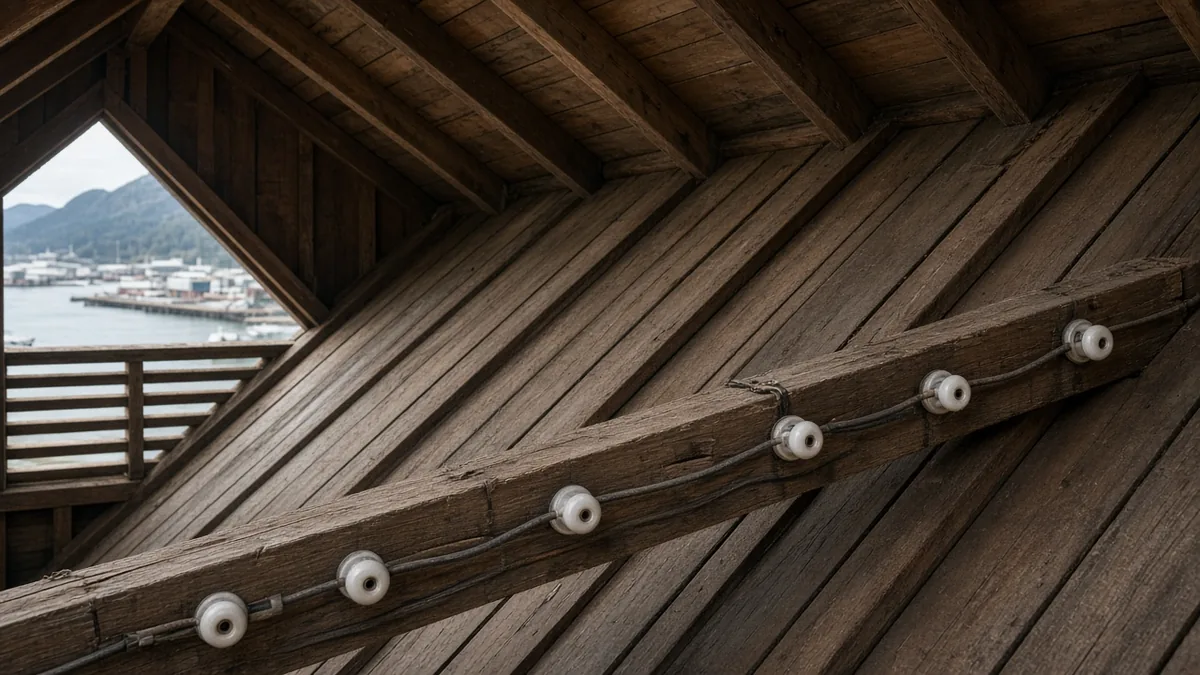
Knob and tube wiring on an Alaska mortgage is usually an insurance problem that becomes a loan problem. The system is the old method that runs single cloth-covered conductors on porcelain knobs, with porcelain tubes where the wire passes through wood. It is still in attics and wall cavities of older houses in Juneau, downtown Anchorage, and parts of Fairbanks. If a carrier will not bind a policy while any of it is energized, the purchase loan waits.
Alaska Home HQ is educational. It is not a lender, and it is not an electrician. Subject to credit approval. Aluminum branch wiring is a different defect, on the aluminum wiring page. A Stab-Lok panel is a different box, on the Federal Pacific page. A general remodel of a service is the electrical upgrades guide. This page is only the knob-and-tube that is still in the house.
When knob and tube wiring stops an Alaska mortgage
HUD Handbook 4000.1 tells the appraiser to report an electrical system that is not adequate for the house, and to report visible frayed or exposed wiring. It tells the appraiser to condition the report when mechanical systems look damaged or do not function. The current utilities section does not list knob-and-tube by name as an automatic rejection. An archived HUD field guide once treated the system as acceptable when it was in good condition. That archive is not the handbook a file is written to today. The living question is whether the wiring that is still energized is safe to operate and adequate for the house, and whether anyone will insure it.
The homeowners insurance requirements explain why the binder sits in the loan file at all. A purchase generally does not fund without a policy. Carriers differ. Some decline houses with active knob-and-tube. Some bind if an electrician certifies that the remaining runs are abandoned. Some want it removed before they will quote. The written quote is the fact. A listing that says “insurable” without the carrier’s name is a marketing sentence.
The FHA minimum property standards checklist is the wider habitability list. Knob-and-tube becomes a line on that list when the appraiser sees exposed conductors, splices buried in insulation, or a system that does not support the house. It does not become a line merely because a buyer recognizes the porcelain from a photograph.
Active wiring versus abandoned remnants
Remnants are not the same as a live circuit. Old knobs in an attic can be left behind after a rewire, with the conductors cut and the circuits moved to cable. They can also still be feeding bedrooms. The difference is a meter, a tester, and someone licensed to say which it is. A buyer’s flashlight does not settle it.
Ask the electrician’s note to answer four plain questions. Is any knob-and-tube still energized. Which rooms does it serve. Is it buried under insulation. Are there open splices. A letter that says “old wiring observed” does not tell the underwriter or the carrier what to do. A letter that says “all knob-and-tube is abandoned and the house is served by cable from the panel” is a different document.
Insulation piled over knob-and-tube is a known heat problem, because the old system was meant to dissipate heat in open air. This article does not state a clearance in inches. If the attic was insulated over the conductors, the electrician’s note should say so, and the carrier should see that sentence before anyone treats the attic as finished work.
Fuse panels sometimes sit next to this wiring, and sometimes they do not. A breaker panel in the basement does not prove the attic was rewired. People change the panel and leave the old runs in place, spliced into the new breakers. The panel brand is the Federal Pacific article if the door says Stab-Lok. The conductors in the attic are this article. Photograph both, and label the photos.
What Southeast and Southcentral houses add
Juneau houses from the early twentieth century, and Anchorage houses from before the big postwar build, are where this wiring still turns up. Rain and a tight attic are a hard combination. Cloth insulation on the conductors gets brittle. Porcelain cracks. A system that has been quiet for decades can still be the reason a new policy is declined, because the carrier is looking at the method, not at the owner’s story that it “never had a problem.”
A house that was rewired in the 1990s and still has a scrap of tube in one joist bay is a documentation problem, not automatically a rewire. The scrap has to be shown as dead. If the electrician cannot say that, the file is treated as if the old system is still in service. That is the conservative reading, and it is the one that keeps closings from blowing up in the last week.
Alaska winters make a last-minute rewire expensive in calendar days, not because of a statewide price list. Attic work in January is slow, electricians are booked with no-heat calls, and a lender’s condition that says “remove knob-and-tube” does not create a crew. The purchase contract is where the parties name who pays and what “done” means. A credit that leaves the wiring in place does not help if the carrier will not bind until it is gone.
How to keep the file from guessing
Put the inspection, the electrician’s letter, and the insurance quote in the same package before you waive the inspection period. The appraiser is not hired to trace every conductor. The handbook allows an electrical certification when the appraiser cannot tell whether the system works properly. That certification is a reasonable thing to order early in an older Juneau house, rather than after the appraisal comes back “subject to.”
Do not energize a system that an electrician has told you to leave alone, and do not pull cloth wiring to “see what happens.” The repair, if one is required, belongs to someone who does this work. Complete replacement of the old runs is one scope. Abandoning dead remnants and documenting them is another. The carrier picks which scope it will accept. The lender follows the binder and any appraisal condition. Those two readers can disagree, and the stricter one controls the closing.
Rates vary and are subject to credit approval. When the electrician’s letter and a written insurance quote are in hand, Premier Mortgage (NMLS# 1168048) can look at whether the loan file matches the house that will actually be insured.
Frequently Asked Questions
Does FHA ban knob and tube wiring in Alaska?
The current FHA handbook does not list knob-and-tube by name as an automatic rejection. The appraiser reports inadequate capacity, exposed or frayed wiring, and systems that look damaged or do not function. An archived field guide once accepted the system when it was in good condition. That archive is not a promise that a current file will pass, and it says nothing about whether a carrier will bind a policy.
Can abandoned knob and tube stay in the attic?
It often can, when an electrician documents that the conductors are not energized and the house is served by newer cable. The letter has to be specific about rooms and about whether the old wire is dead. Knobs left in place without that letter get treated as a live system by cautious underwriters and by many carriers. Photograph the cut ends and keep the letter with the photos.
Will homeowners insurance cover a house with knob and tube?
Some carriers decline active knob-and-tube, and some bind if the system is certified as abandoned. The answer is the written quote from the company the buyer will actually use. A purchase loan generally needs that policy before closing. If the only quotes require the old wiring to come out, budget calendar time for a rewire.
Is knob and tube the same problem as an old fuse panel?
No, The panel is the box where the circuits start, and knob-and-tube is a way of running the conductors. A house can have a new breaker panel and still have old conductors in the attic. Inspect and document each one. A Federal Pacific Stab-Lok panel is its own issue and is not solved by an attic letter about porcelain knobs.
Who pays to replace knob and tube before closing?
The purchase contract names who pays. The lender’s condition and the carrier’s binder decide whether the work has to be finished before closing or whether a dead, documented remnant can stay. A seller credit that leaves energized knob-and-tube in the walls does not satisfy a carrier who will not bind until it is removed. Get the bid and the binder language in writing before the inspection period ends.
Ready to Take the Next Step?
Get a free home loan quote today through our trusted partner.
Or call 9078411600
Disclaimer: This article is for informational purposes only and does not constitute financial, mortgage, legal, or tax advice. Interest rates, loan programs, eligibility requirements, and fees are subject to change without notice and may vary based on your individual circumstances. Alaska Home HQ is not a lender, broker, or financial institution. All loan applications are processed by Premier Mortgage (NMLS: 1168048). We may have a business relationship with Premier Mortgage and may receive compensation when you use their services through our links. Consult a licensed mortgage professional before making financial decisions. Terms of Service · Privacy Policy