Orangeburg Sewer Lateral Mortgage Alaska
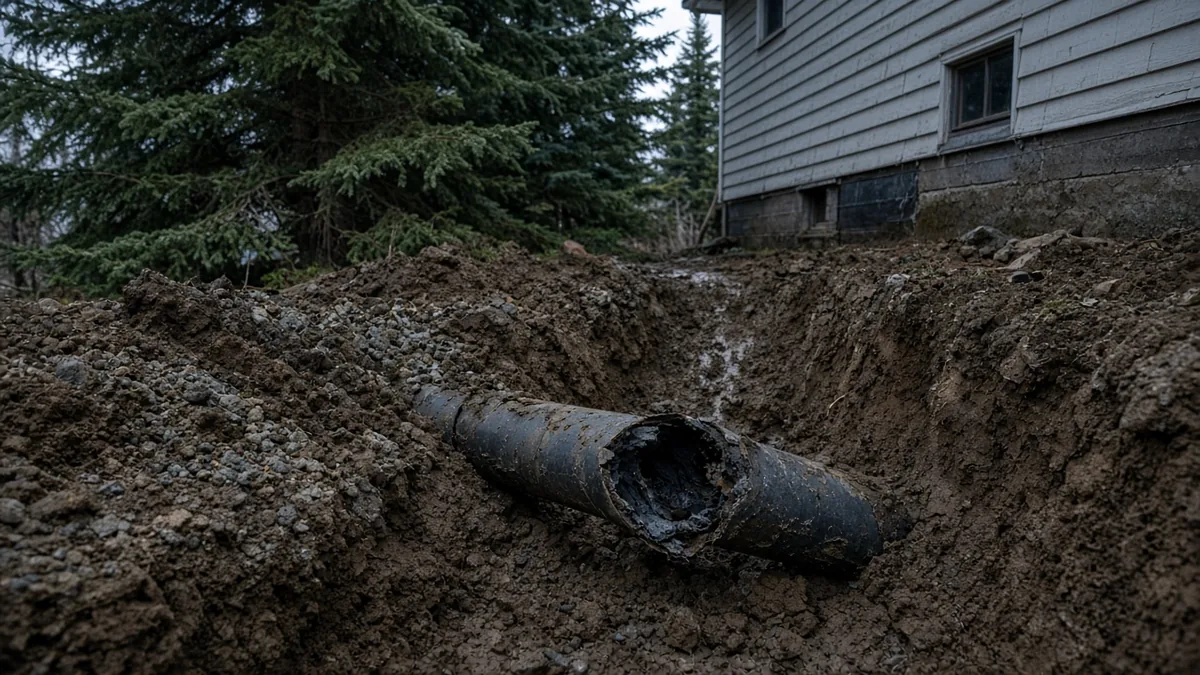
Orangeburg sewer lateral mortgage Alaska buyers meet the defect under an older house, in the pipe that runs to a municipal main. Orangeburg is bituminized fiber pipe. It was laid as a sewer lateral, the connection between the house plumbing and the city sewer. It flattens, ovalizes, and lets roots in. A camera from the cleanout shows a collapsed bore and standing waste. That is a municipal lateral. It is not an onsite septic tank, and it is not a drain field.
Alaska Home HQ is educational. It is not a lender, a plumber, or the utility. Subject to credit approval. Tanks, fields, and state wastewater approvals live on the septic systems page and the ADEC wastewater approval page. A cesspool is a different hole, on the cesspool page. This page is only the crushed municipal lateral, the kind that still turns up on older houses in Anchorage.
When an Orangeburg sewer lateral mortgage Alaska file stalls
HUD Handbook 4000.1 tells the appraiser to look at utilities and to report a system that is not adequate or does not function. The handbook does not name this pipe. The condition that matters is a sewer that backs up, a line a plumber cannot pass, or a repair the house needs before waste leaves the building. If the appraiser sees a backup, or is handed a camera report that says the lateral has collapsed, the appraisal comes back subject to repair. A conventional reader of the same report can condition the file the same way. A house that cannot send waste to the main is not a finished property.
The homeowners insurance requirements are a second reader, and they are easy to confuse with the appraisal. A backup that has already soaked a finished floor can be a claim question. A crushed lateral that has not flooded the house is usually a repair question. The written camera report is the fact. A listing line that says the sewer was “recently scoped,” with no video and no stills, is a marketing sentence.
Interior drains are a third segment. The plumbing guide covers pipe inside the house. A new kitchen stack, a replaced cast-iron run under the slab, or a new water heater does not prove the lateral in the yard was replaced. People remodel the rooms they see and leave the fiber pipe in the ground.
What the camera report has to answer
Ask the scope for four plain answers. Where did the camera enter. How far did it travel before the pipe changed shape. Is the crushed section on the lateral that serves this house, or at the main. Did the camera reach the connection. A sentence that says “Orangeburg observed” does not tell a lender whether the line still carries waste. A sentence that says the bore is deformed, the camera stopped, and the deformity is on this house’s lateral is a different document. Keep the stills with the note. A video nobody can find on the day of underwriting is the same as no video.
This page does not assign ownership of the lateral or of the main. Utilities write their own rules about which segment they repair and which segment they bill to the property. The locate, the utility’s written comment, and the last repair invoice are the papers that name who is being asked to dig. A seller who says “the city owns all of it” without those papers is guessing. A buyer who assumes the opposite, and prices a full replacement into the offer, may be paying for a segment the utility will replace on its own schedule. Get the split in writing before the inspection period ends.
Winter changes the calendar without changing the condition. Frozen ground, a street cut, and a booked excavator are reasons a repair slips, not reasons the pipe is sound. A lender condition that says the lateral has to be replaced does not create a crew. The purchase contract is where the parties name who pays, whether the work has to be finished before closing, and what “finished” means. A seller credit that leaves the crushed pipe in the ground does not satisfy an appraisal that is subject to the repair.
Purchase files and refinance files
A purchase usually has an inspection window. That window is the time to scope the line, while the contract still lets either side walk or renegotiate. Waiting until the appraisal is ordered, and then discovering the backup, spends the days the parties needed for a bid.
A refinance often has no inspector. The appraiser still walks the house. A floor drain that gurgles, a basement that smells of sewage, or a cleanout cap that is wet are the clues that person can see without a camera. If those clues are present, expect a condition. If they are absent, the crushed pipe can still be there. Refinance readers do not dig up the yard. Owners who already know the lateral is fiber, because a plumber told them so on a service call, are the people who can put the camera report in the file before the appraiser arrives.
Title insurance is a weak tool for this defect. A title commitment insures the lien position and the ownership, not the shape of a buried pipe. Clearing a judgment or an old deed of trust does not prove the lateral is round. The physical condition lives in the inspection, the camera report, and the appraisal. Keep those three in one folder.
How a bid keeps the closing from guessing
A useful bid names the method, the segment, and the proof that the work is done. Trenching and pipe-bursting are different jobs. A bid that says “sewer repair” can mean a spot patch, a liner, or a full replacement, and those are not the same condition-satisfaction. Ask the contractor to say whether the new pipe will run from the house to the main, or only through the crushed stretch, and whether a follow-up camera is included. The follow-up scope is what shows the deformity is gone. A paid invoice with no after photo leaves the underwriter holding the original failure.
Permits and street cuts belong in the bid notes when the work leaves the yard. Some laterals fail under a driveway or a neighbor’s easement. The bid that ignores access is the bid that slips after everyone has already agreed to a closing day. None of that is a promise that a given loan program will accept a credit in lieu of the work. The stricter of the appraisal condition and the insurer’s requirement controls.
Rates vary and are subject to credit approval. When the camera report and a written repair plan are in the file, Premier Mortgage (NMLS# 1168048) can look at whether the loan matches the house that will actually drain.
Frequently Asked Questions
Is Orangeburg pipe the same thing as a septic tank?
No. Orangeburg here means a bituminized fiber municipal sewer lateral, the pipe between the house and a city main. A septic tank is an onsite wastewater vessel with a drain field or a similar dispersal system. A pump-out receipt for a tank does not document a lateral. If the house is on a septic system, the wastewater-approval page is the one that matches the file.
Can a mortgage close on a house with a crushed sewer lateral?
It can close after the condition is satisfied, and it stalls while the condition is open. Appraisers report utilities that do not function. A camera report that shows a collapsed lateral is the usual evidence. A seller credit that leaves the crushed pipe in place does not meet a report that is subject to replacement. The purchase contract names who pays for the work.
Does the city replace every Orangeburg lateral?
Ownership of the main and of the house lateral is a utility rule, and it is not the same sentence in every Alaska city. This page does not assign that split. Ask the utility in writing which segment it will repair and which segment it bills to the property. A verbal “the city will get to it” is not a condition-satisfaction letter.
Will a sewer camera satisfy the appraiser by itself?
A clear camera report often answers the question the appraiser could not see from the basement. The report still has to say where the camera entered, whether it reached the main, and whether the pipe is deformed. A one-line note with no stills is weak. If the appraisal is already subject to repair, the follow-up scope after the work is the document that shows the repair happened.
Does homeowners insurance pay to replace a crushed lateral?
Insurance and the loan condition are different readers. A backup that damaged finishes may be a claim, and a crushed pipe that has not flooded the house is usually a repair the parties negotiate. The policy and the written quote control the insurance side. The appraisal condition controls the loan side. Read both before treating a credit as a solution.
Ready to Take the Next Step?
Get a free home loan quote today through our trusted partner.
Or call 9078411600
Disclaimer: This article is for informational purposes only and does not constitute financial, mortgage, legal, or tax advice. Interest rates, loan programs, eligibility requirements, and fees are subject to change without notice and may vary based on your individual circumstances. Alaska Home HQ is not a lender, broker, or financial institution. All loan applications are processed by Premier Mortgage (NMLS: 1168048). We may have a business relationship with Premier Mortgage and may receive compensation when you use their services through our links. Consult a licensed mortgage professional before making financial decisions. Terms of Service · Privacy Policy