Propane Tank Setback Mortgage Alaska
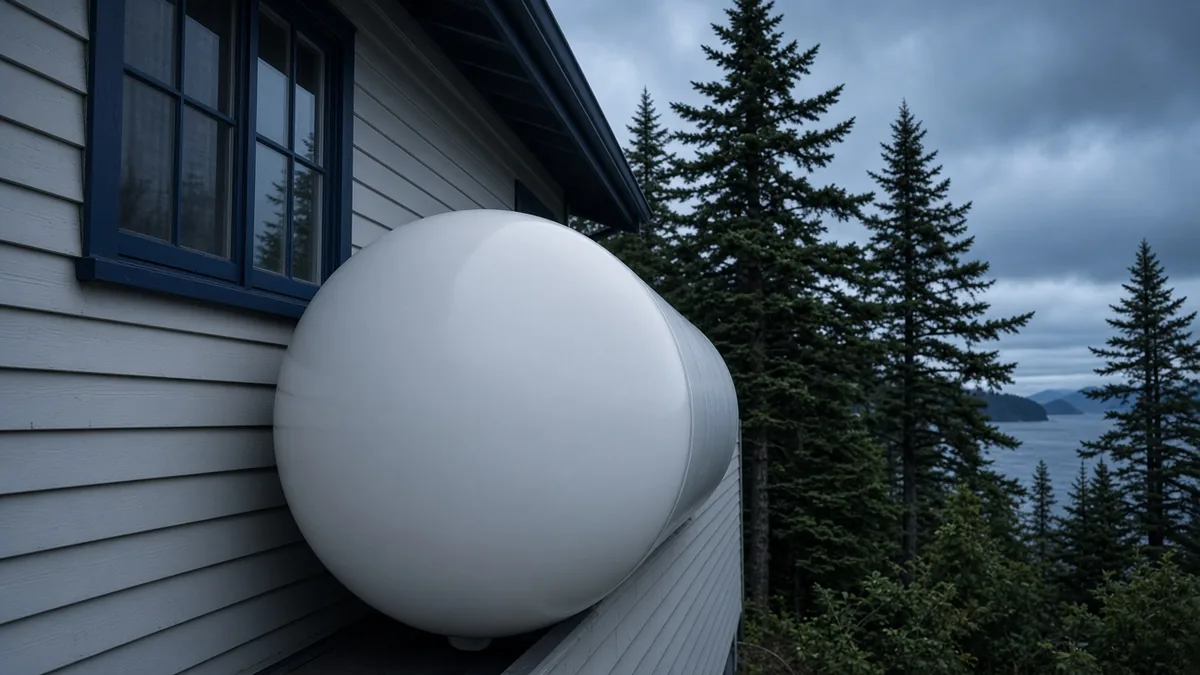
A propane tank setback mortgage Alaska file opens when the tank that feeds the house sits inside the distance a fire code, a local fire authority, or an insurer requires between the tank and the building, an opening, or a property feature. The loan stalls on that written distance, not on a number guessed from a national table. This page will not state a footage. If a figure is not the one the authority adopted for this property, it does not belong in the file.
Alaska Home HQ is educational. It is not a lender, a gas fitter, or the fire marshal. Subject to credit approval. A heating-oil tank is a different vessel, on the heating-oil tank page. How the appliance uses the fuel is the home heating guide. This page is only the tank that is too close, on a house in a place like Kenai where propane heat and a short lot are a common pair.
Why a propane tank setback mortgage Alaska condition has no single footage here
The Alaska State Fire Marshal adopts the International Fire Code under 13 AAC 50.025. The Fire Marshal’s plan-review page says installation or change of fuel tanks is reviewed before work, and it says residential housing of three units or fewer is exempt from that state plan-review requirement. A typical house can therefore sit outside the state’s review and still sit inside a local fire authority’s rules, or inside an insurer’s bulletin. Deferred jurisdictions adopt and enforce their own codes. The distance that matters is the one that authority, or the carrier, writes down for this tank.
Wildfire-safety pamphlets sometimes recommend a separation for fuel tanks. A pamphlet is not the adopted fire code, and this page will not promote a pamphlet number into a lending rule. If the local fire authority cites a section and a distance, put that writing in the file. If the insurer declines to bind unless the tank is moved, the declination is the distance that controls the loan, because a purchase generally does not fund without a policy. The homeowners insurance requirements are why that quote is not optional.
HUD Handbook 4000.1 tells the appraiser to note health and safety conditions and to photograph what is there. An appraiser is not the fire marshal. A photo of a tank under a window, or hard against a soffit, is a clue. The condition becomes a measured one only when someone with authority says the tank is inside the required separation. Ask for that sentence in writing. A listing remark that says the tank is “to code” without naming the code or the official is a marketing sentence.
What the letter and the bid should cover
A useful letter identifies the tank, the building, and the features the code cares about: walls, openings, ignition sources, property lines, and any second tank. It says whether the existing location meets the setback the writer is applying, and it cites the code or the insurer bulletin rather than a round number from memory. If the tank does not meet it, the letter says what relocation would comply. Moving a tank is a gas-fitter’s job, with a pressure test and a leak check after the move. A homeowner drag of a full tank across the yard is not the closeout.
The bid should say whether the tank stays the same vessel or is replaced, where it will sit, and who pulls any local permit the jurisdiction actually requires. Because one-to-three-unit houses are outside the state plan-review requirement described above, do not assume a state stamp is part of the file, and do not assume no permit exists locally. Kenai Peninsula cities and the borough are not the same desk. Call the desk that covers the parcel.
Underground tanks and above-ground tanks are different equipment. This page is the above-ground propane tank people see beside the house. An abandoned underground oil tank is the oil-tank page. If both are on the lot, photograph both and get two letters. A propane relocation does not empty an old oil tank.
Appraisers also note whether the appliance the tank serves actually heats the house. A tank moved to a compliant spot, with the line capped and the boiler cold, solves the setback and opens a heat condition. Coordinate the fitter and the heating contractor so the closeout says the tank is in the accepted location and the heat runs. The FHA checklist is the wider habitability list. Heat and safety both have to be true on the day the report is written.
Credits, winter moves, and the binder
A seller credit that leaves the tank under the eave does not satisfy a carrier that will not bind, and it does not satisfy an appraisal that is subject to correction of a safety condition. The purchase contract names who pays for the move. Winter complicates the work. Frozen ground, a full tank, and a short driveway change the schedule. None of that changes the separation the authority wrote down. If the only bids are for after breakup, the closing date has to move or the parties need a written acceptance of the current location. Hope is not an acceptance.
Buyers sometimes measure the gap with a tape and declare the tank fine because the gap “looks like” a figure they read online. Bring the tape measurement to the fire authority or the insurer as a fact about distance, and let that office apply its code. Do not paste an internet footage into the loan file as if it were 13 AAC 50.025. The regulation adopts a code. It is not, in this article, a substitute for the local writing.
Owners who want a larger tank, a second tank, or a tank moved to serve an addition are in a new installation, not a documentation exercise. That is the moment a permit is most likely to be real. Say so in the contract if the purchase depends on the addition. The loan on the house as it sits is a different application from the loan on the house plus a project.
Rates vary and are subject to credit approval. When the fire authority or the insurer has said, in writing, that the tank location is acceptable, Premier Mortgage (NMLS# 1168048) can look at whether the loan matches the house that can actually be insured.
Frequently Asked Questions
How many feet does Alaska require between a house and a propane tank?
This page will not give a footage. The State Fire Marshal adopts the International Fire Code under 13 AAC 50.025, and a one-to-three-unit residence is outside the state plan-review requirement on the Fire Marshal’s site. Local fire authorities and insurers apply their own written distances. The number that belongs in the loan file is the one those offices write down for this tank.
Will a mortgage close if the tank is too close to the house?
It stalls while a safety condition or an insurance declination is open. Moving the tank, or obtaining a written acceptance of the current spot, is the cure. A seller credit that leaves the tank in the rejected location does not bind the policy and does not clear a report that is subject to correction. The contract names who pays for the move.
Is a propane tank the same problem as a heating-oil tank?
No. Propane setback is a fire-code separation for a pressurized fuel tank. A heating-oil tank is a different vessel, often a leak and pollution question, on its own page. Houses can have both. Photograph each one and get the letter that matches that fuel. A propane fitter’s tag does not inspect an abandoned oil tank.
Does the appraiser measure the setback?
The appraiser photographs and comments on safety conditions. The measured rule comes from the fire authority or the insurer, in writing, with the code or bulletin they are applying. An appraisal photo of a tank under a window is a reason to get that letter. It is not itself the code section.
Do small houses need a State Fire Marshal plan review for a tank?
The Fire Marshal’s plan-review page says residential housing of three units or fewer is exempt from that state review, which includes fuel-tank installation. Local permits can still apply. Ask the jurisdiction that covers the parcel. Being outside state review is not a finding that the tank may sit against the wall.
Ready to Take the Next Step?
Get a free home loan quote today through our trusted partner.
Or call 9078411600
Disclaimer: This article is for informational purposes only and does not constitute financial, mortgage, legal, or tax advice. Interest rates, loan programs, eligibility requirements, and fees are subject to change without notice and may vary based on your individual circumstances. Alaska Home HQ is not a lender, broker, or financial institution. All loan applications are processed by Premier Mortgage (NMLS: 1168048). We may have a business relationship with Premier Mortgage and may receive compensation when you use their services through our links. Consult a licensed mortgage professional before making financial decisions. Terms of Service · Privacy Policy