Lead Water Service Line Mortgage Alaska
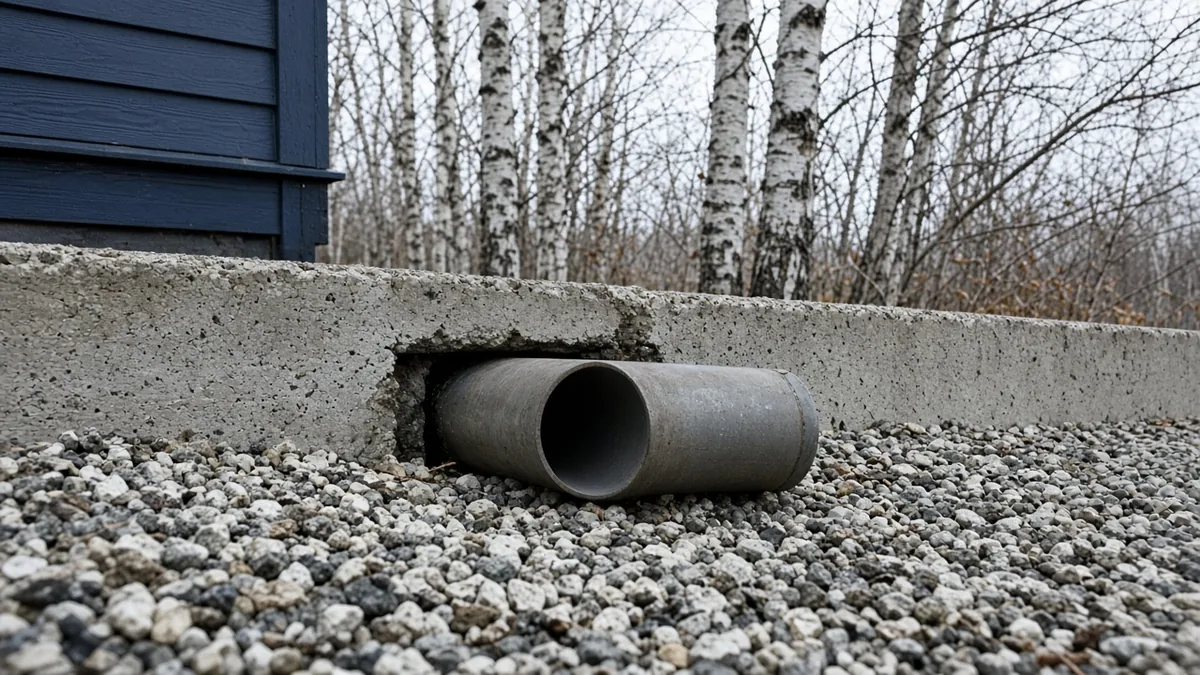
A lead water service line mortgage Alaska question is about the pipe that carries water from the public main to the house. The U.S. Environmental Protection Agency describes a service line as that pipe, and it describes lead service lines as a main source of lead in drinking water where they are present. EPA also classifies galvanized pipe that requires replacement, because lead can stick to galvanized iron or steel that has been downstream of a lead source. The loan file is asking what this house’s line is made of. It is not asking for a well-water lab report.
Alaska Home HQ is educational. It is not a lender, a plumber, or the water utility. Subject to credit approval. Interior galvanized plumbing, the pipes inside the walls, is the galvanized plumbing page. A private well and a lab panel for arsenic or other contaminants are the well systems page and the arsenic page. This page is only the service line from the main to the building, on a house served by a public system in a place like Eagle River.
How a lead water service line mortgage Alaska file is built
EPA’s inventory classes for a service line are lead, galvanized requiring replacement, non-lead, or unknown. The inventory is the water system’s record, and it is supposed to cover the line even where ownership of the pipe is split between the utility and the customer. A printout that says “unknown” is not a clean bill. It means the system has not identified the material. A printout that says “non-lead” is the system’s classification, and it can still be wrong if it was a guess from the age of the street. The useful package is the inventory line for this address plus a plumber’s look at the pipe where it enters the house.
The plumber’s note should say what is visible at the entry, on both sides of the valve if both sides can be seen, and whether the visible pipe is lead, galvanized, copper, plastic, or something the plumber will not name without exposing more of it. Lead is dull, soft, and often a dull gray that a magnet will not grab. Galvanized is threaded steel. Those field clues are the plumber’s job to write down. A buyer’s photo of a pipe in a crawlspace, with no label, is not an inventory update.
HUD Handbook 4000.1 tells the appraiser to report utilities that are not adequate or do not function. Running water at the kitchen sink does not identify the metal in the yard. The appraiser is not the inventory. If the report is silent on pipe material, the inventory and the plumber’s note still belong in the loan file when the buyer has them. Some underwriters condition for replacement when the line is lead or galvanized requiring replacement. Some accept the house with the line disclosed and a plan. The condition that arrives is the one to answer. This page does not promise that any program ignores a lead line.
What replacement actually documents
Replacement of a service line is a dig from the main, or from the property-side connection, to the house, depending on which segment is lead. Partial replacement, swapping only the easy piece and leaving a lead piece in the ground, is a known way to leave the problem in place. Ask the bid to say which segment will be replaced, what material the new pipe will be, and whether the utility has to be on site for the tap at the main. A bid that says “water line repair” can mean a leak fix on copper. That is a different job.
After the work, the closeout is the plumber’s or the utility’s statement that the service line serving this address is no longer lead or galvanized requiring replacement, plus a photo at the entry. Update the way the utility asks owners to report a replacement, so the public inventory does not keep saying “lead” after the pipe is gone. A loan that closes on a letter, while the city’s map still flags the address, creates the next owner’s fight. Do both.
Winter ground changes the schedule. A condition written in a month when the soil is frozen is a condition that may wait on a thaw, a thaw settlement, or a utility crew that is on emergency leaks. The purchase contract is where the parties say who pays and whether closing waits for the new pipe. A credit that leaves a lead line in the ground does not meet a condition that requires replacement. If the underwriter will close on a credit and a signed replacement contract, get that permission in writing. Assume nothing from a different file.
Ownership of the customer side versus the utility side is a local rule. EPA’s inventory guidance says the record should classify material on both sides where ownership is split. This page does not say which Alaska utility owns which feet. The utility’s written rule, and the locate they mark, are the split. A seller who says “the city will replace it for free” needs the program letter, not a neighborhood story.
Wells, interior pipe, and the test people order by habit
A house on a well does not have a municipal service line. Ordering a metals panel on well water can still be wise, and it is the well page, not this one. A house on city water can have a lead service line and also have galvanized pipe in the walls. Replacing the line to the foundation and leaving galvanized branches inside is two scopes. The interior page covers the branches. If both are present, say both, because a letter about the yard does not clear a letter about the crawlspace.
Point-of-use filters and a pitcher at the sink do not change the material of the service line. They may be how the household drinks water today. A lender asking for the line to be identified is asking a different question than a household asking how to pour a glass of water tonight. Keep the health practice and the loan condition in separate sentences so nobody treats a filter receipt as a pipe replacement.
The home inspection guide is where the entry pipe is often photographed for the first time. Ask the inspector to note the material at the wall penetration if it is visible, and to say if it is buried. Then match that note to the utility inventory. Disagreement between “copper at the wall” and “lead on the map” means somebody has to expose more pipe or pull the utility’s source documents. Closing on the cheerful of the two answers is how the condition comes back after underwriting.
Rates vary and are subject to credit approval. When the inventory line and the plumber’s identification are in the file, Premier Mortgage (NMLS# 1168048) can look at whether the loan matches the water line that actually serves the house.
Frequently Asked Questions
Is a lead service line the same as galvanized plumbing inside the house?
No. The service line is the pipe from the water main to the building. Galvanized pipe inside the walls is a different run, covered on the galvanized plumbing page. EPA also uses a class called galvanized requiring replacement for some galvanized service lines that have been downstream of lead. A note about bathroom pipes does not classify the line in the yard.
Does a water test replace the service line inventory?
A lab result says what was in the sample that day. The inventory says what the utility believes the pipe is made of. A low result does not prove the pipe is plastic, and a high result does not by itself locate the lead. For a house on a public system, get the inventory for the address and a look at the pipe at the foundation. A well test belongs to a house that has a well.
Will every loan require the lead line to be replaced before closing?
Programs differ, and this page will not promise a waiver. Some files are conditioned for replacement when the line is lead or galvanized requiring replacement. Some proceed with disclosure. The condition in your approval, the utility’s classification, and the plumber’s note are the three papers to reconcile. A seller credit with the old pipe left in the ground fails a condition that says the line has to be replaced.
Who pays to replace the line, the utility or the owner?
Where the pipe is split, each side follows the utility’s rule. EPA expects the inventory to classify both portions. Ask the utility, in writing, which portion it replaces and which portion it bills out. A bid should name the segment, the new material, and whether the utility has to make the tap. Verbal promises about a free replacement need a program letter.
What if the inventory says the material is unknown?
Unknown means unidentified, not non-lead. The next step is the utility’s method for updating a line, plus a plumber at the entry point. If the visible pipe is copper for a short stub and the rest is buried, say that the buried portion is still unknown. Closing on a stub of copper is how a lead section stays in the yard.
Ready to Take the Next Step?
Get a free home loan quote today through our trusted partner.
Or call 9078411600
Disclaimer: This article is for informational purposes only and does not constitute financial, mortgage, legal, or tax advice. Interest rates, loan programs, eligibility requirements, and fees are subject to change without notice and may vary based on your individual circumstances. Alaska Home HQ is not a lender, broker, or financial institution. All loan applications are processed by Premier Mortgage (NMLS: 1168048). We may have a business relationship with Premier Mortgage and may receive compensation when you use their services through our links. Consult a licensed mortgage professional before making financial decisions. Terms of Service · Privacy Policy