Landslide Hazard and Alaska Mortgages
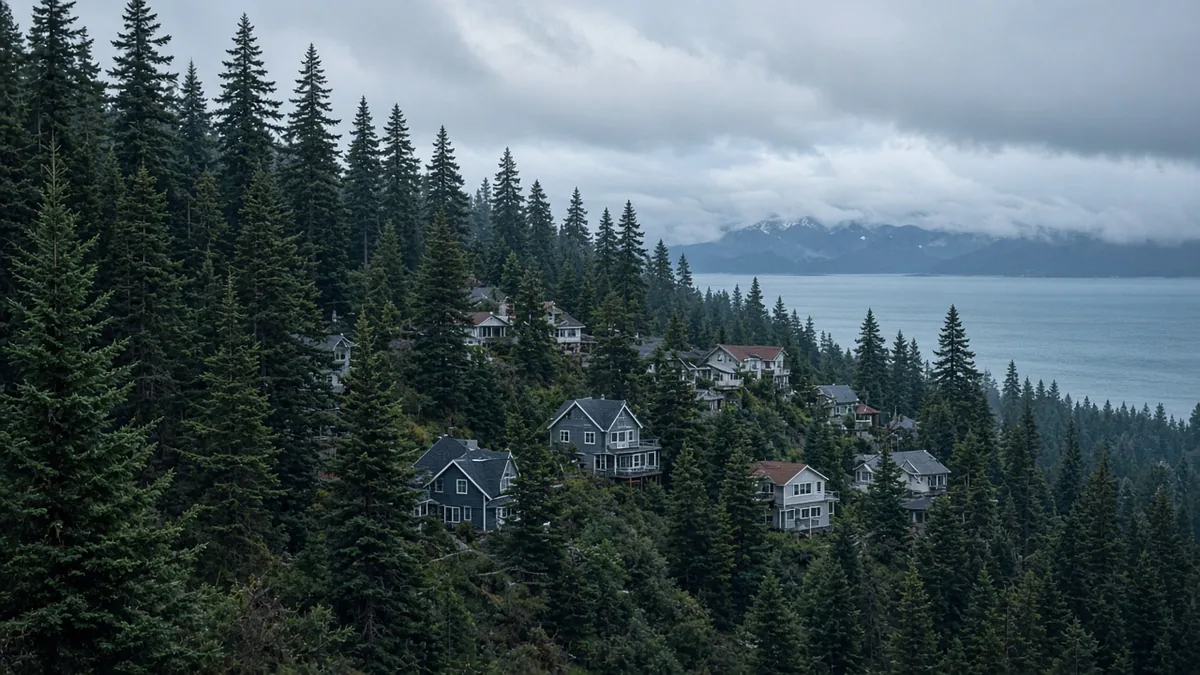
An Alaska landslide hazard mortgage is a home loan on a property where slope movement is part of the risk: a scar on the hill, a fan of debris, a house that has crept out of square, or a lot that shows up when a geologist maps known slides. The map is a starting point. It is not an approval and it is not a denial. Steep coastal towns such as Sitka are where buyers ask. Interior bluffs and river cuts produce the same category of question with different weather.
Alaska Home HQ is educational. It is not a lender and it is not the Division of Geological & Geophysical Surveys. Subject to credit approval. This page does not cite an ordinance number. Cities and boroughs write their own hillside rules, and those rules are not one statewide code.
What an Alaska landslide hazard mortgage uses the state map for
The Division of Geological & Geophysical Surveys runs a Landslide Hazards Program. The program’s page says it maps and assesses landslides and works on how that hazard is communicated. It says the Alaska Landslide Inventory is published, is viewable as an online map, and was compiled from 350-plus sources, with updates planned. It also says a deep-seated bedrock landslide susceptibility map is available. Those products are geological information. A mortgage underwriter does not “fail” a house because a statewide inventory exists. The inventory is how a buyer learns that a slope has a published history, or that a region is being studied.
The same page describes field work at the Beach Road landslide in Haines. It says the program continues to support research and monitoring at the Barry Arm landslide. Barry Arm is a fjord hazard and a monitoring effort. It is not a residential underwriting rule, and it is not a finding about a house lot in a city. The page also says the program is working with the City of Cordova and the City and Borough of Wrangell on inventories and susceptibility maps, with funding from the FEMA Cooperative Technical Partners program. Those local maps, as the page describes them, are in progress as a partnership. This article does not treat an unfinished city map as a loan condition.
Use the inventory the way you would use any screening map. If the parcel or the slope above it appears, you have a reason to look harder. If it does not appear, you do not have a clean bill of health. The program says the work is ongoing. Absence from a database that is still being built is not proof of a quiet hillside.
How this differs from avalanche and bluff erosion
Snow that slides and ground that slides are different mechanisms, even when a house could be hit by either. The avalanche zone mortgage guide is the snow path. The coastal bluff erosion guide is the waves-and-retreat path. A Sitka or Seward lot can raise more than one of these. Keep the reports separate so the appraiser and the insurer are reacting to the right process.
Earth movement and earthquake shaking also get blurred. Alaska has both. An earthquake insurance guide is about the policy, not about a soils report. Many homeowners policies limit or exclude earth movement. Read the form. A geologic report does not bind coverage, and a binder does not stabilize a slope.
Local ordinances, where a city has adopted hillside standards, are the planning department’s document. This page does not cite one, for Sitka or for anyone else. Ask the city or borough that has jurisdiction over the parcel. A statewide inventory does not enact a setback, a building ban, or a disclosure form. Disclosure duties, if any, come from the license rules and the contract, not from this article.
What the loan file can actually hold
Appraisers comment on what they see: slope, drainage, settlement, cracked foundations, doors out of square, and whether comparable sales sit on similar ground. The home appraisal process is the general version. If the appraiser conditions the report on an engineer, that condition is the file’s problem to clear. A buyer can also hire a geotechnical engineer when the slope is the reason they are hesitating, even if the lender has not asked yet. An engineer letter is specific to that site. A statewide susceptibility map is not a substitute for it.
Put these in the stack when they exist:
- The appraisal, including slope comments and photos.
- Any geotechnical report, with the date and the author.
- The listing of prior slides the seller actually knows about, in writing.
- The insurance quote, showing whether earth movement is covered, excluded, or offered by endorsement.
- Any open permit or notice from the local government about the hillside.
A repair that is “we will retain the slope after closing” is a future project. Lenders commonly want the collateral to meet the program as of closing. A plan, a bid, and a finished wall are three different facts. Match the contract to the one you mean.
Season shows up in the hazard even when the loan is a stack of paper. Spring thaw and long heavy rains are when many slopes move. A summer showing on a dry day is a fair time to see the view and a poor time to assume the drainage is finished. Look at where water is aimed: roof leaders, driveway crowns, and the ditch above the house. Chronic water on a steep lot is a maintenance item that becomes a stability item.
Snow load on the roof is a related but separate structural question. The snow load appraisal guide covers that. Do not let a roof-snow conversation replace a slope conversation, or the reverse.
The Permanent Fund Dividend Division posted the 2026 dividend at $1,200, including a $200 energy relief payment, on the PFD site. It can help pay for an engineer visit. It does not move a hillside, and it does not buy coverage a policy excludes.
Ready to explore your options? Get a free home loan quote from Premier Mortgage (NMLS# 1168048).
Frequently Asked Questions
If my lot is on the state landslide inventory, is the loan denied?
Not by this page, and not by the inventory’s existence. DGGS describes the inventory as a compiled map that is still being updated. A lender reads the appraisal and any engineering. Some houses on mapped slopes are financed. Some are not, because of condition, insurance, or value. The map is a reason to investigate.
Does a clear inventory search mean the slope is safe?
No. The program says updates are planned and the inventory was built from many sources, which means gaps are expected. A site visit, the local knowledge of slides that did not make a database, and drainage on the lot still matter. Treat a clear search as “not listed,” not as “stable.”
What is Barry Arm doing in a home-loan article?
Only as a boundary. DGGS says it supports monitoring there. That work is about a large fjord landslide. It is not a rule for a house mortgage, and it is not evidence about a city lot. If someone cites Barry Arm as a reason to deny or approve a home, they are in the wrong scale.
Can earthquake insurance stand in for a landslide review?
No. Shaking and a sliding slope are different. The insurance guide explains coverage questions. A geotechnical look explains the ground. You may want both conversations. One does not close the other.
Who do I ask about a local hillside ordinance?
The city or borough planning office for that parcel. This page does not cite an ordinance number and does not pretend the municipalities share one code. Cordova and Wrangell are called out by DGGS as places where inventory work is underway. That note is not an ordinance, and it is not a mortgage standard.
Ready to Take the Next Step?
Get a free home loan quote today through our trusted partner.
Or call 9078411600
Disclaimer: This article is for informational purposes only and does not constitute financial, mortgage, legal, or tax advice. Interest rates, loan programs, eligibility requirements, and fees are subject to change without notice and may vary based on your individual circumstances. Alaska Home HQ is not a lender, broker, or financial institution. All loan applications are processed by Premier Mortgage (NMLS: 1168048). We may have a business relationship with Premier Mortgage and may receive compensation when you use their services through our links. Consult a licensed mortgage professional before making financial decisions. Terms of Service · Privacy Policy