Alaska Ice Jam Flooding When Buying
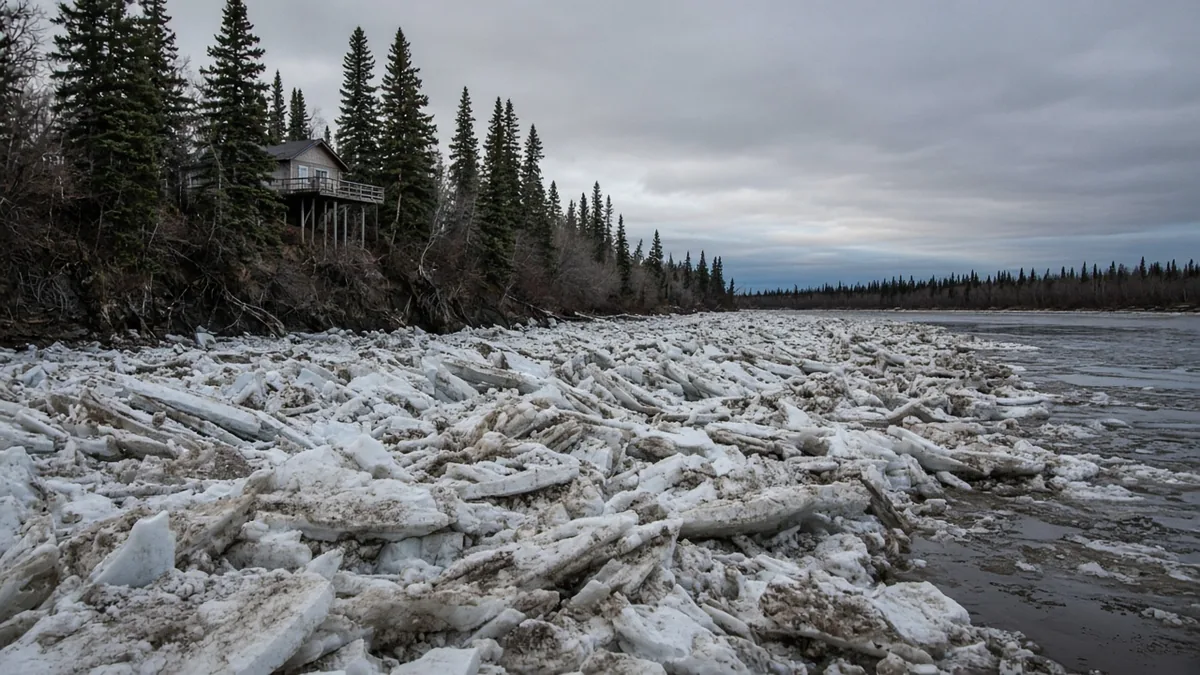
Alaska ice jam flooding when buying is about breakup, when river ice stalls and the water behind it leaves the channel. On the Yukon, the Tanana, and the Kuskokwim, that water can cover ground a standard flood map does not shade. The Alaska-Pacific River Forecast Center at the National Weather Service is the office that watches breakup. A flood insurance rate map is a different product. This page will not quote a crest, a year, or a probability. It will say how a buyer reads the two products without pretending they are the same picture.
Alaska Home HQ is educational. It is not a lender, the weather service, or FEMA. Subject to credit approval. The mapped-zone insurance requirement is the flood-zone buying page and the flood insurance mortgage page. This page is ice-jam water those panels can miss, including along the Tanana near Fairbanks.
Why Alaska ice jam flooding when buying is a different map
A flood insurance rate map studies flooding the study was built to show. An ice jam is a temporary dam of river ice. The water goes where the jam sends it, which may be a slough, a road, or a neighborhood that is outside the shaded special flood hazard area. A house can have a determination that says it is not in that shaded area and still have been in breakup water. The determination answered the map question. It did not answer the jam question. Buyers who stop at “we are not in a flood zone” have stopped early.
The weather service breakup products describe river conditions and flood potential for the season. They are not a survey of one lot. Use them to understand the river. Use the seller, the neighbors, and the elevation of the mechanical equipment to understand the house. Ask where the water came relative to the floor, the furnace, and the well. A story that “the river gets high” is less useful than “the water reached the crawl, and the furnace was replaced after.” Put the second sentence in the disclosure conversation and, if it is material, in the contract’s inspection list.
This page does not say every house outside a shaded zone is dry, and it does not say every house inside one has seen an ice jam. Braided rivers move. A jam that flooded one bend may spare the next. The honest file is local. Fairbanks-area buyers are often on the Tanana system. Buyers downriver on the Yukon or the Kuskokwim are in the same kind of breakup with different communities and different maps. Name the river. A coastal storm-surge flood is not this article.
What to look at in the house
Mechanical equipment set on the floor is the expensive damage. Furnaces, water heaters, and electrical panels that sit where jam water has been are the replacement history worth asking about. A house on a foundation that stayed dry while the yard flooded is a different risk from a house that took water over the finished floor. The home inspection checklist will not, by itself, know the breakup elevation. Tell the inspector the question. Photos from a prior breakup, if the seller has them, belong in the disclosure package. A fresh paint job in a lower level is a reason to ask, not a reason to accuse.
Wells and septic systems can be flooded without the living room taking water. A silted well or a saturated drain field is a health and lending condition of its own. The well systems page and the ADEC wastewater page are those systems. Ice-jam water is one way they fail. Document the system that is actually on the parcel. City utilities in town are a different story from a well on a river lot.
Insurance is two conversations. The lender’s requirement for flood insurance follows the flood determination on the mapped zone, which is the other page. A house outside the shaded area may not trigger that requirement and may still be a house the buyer wants insured, if a carrier will write a policy. Ask. A policy the lender does not require can still be the policy a buyer on the Tanana wants. Get the quote during the inspection period so the payment is in the budget. The insurance requirements page is the binder the loan does require. Flood coverage may be a separate policy. Read both.
The offer, the appraisal, and the loan
The contract can make the breakup history a disclosure and inspection item without pretending the buyer can wait for the next spring to see the river. Buying outside breakup season is normal. The substitute for being there in May is the seller’s knowledge, photographs, the elevation of the damage, and a clear statement of what was repaired. If the seller will not say, price that silence. A credit for “possible flooding” is vague. A credit or a repair for a furnace that was under water is specific, and the appraisal can use the specific one.
Appraisers note condition and external obsolescence they can support. A neighborhood that floods at breakup can affect value if the market shows it. The appraiser is not required to treat every river house as damaged. Give the appraiser the same photos and the flood determination so the report is not surprised later by a letter the buyer already had. Do not ask the appraiser to certify that an ice jam will not happen. That is not an appraisal conclusion.
Accreted bars and moved channels are a title problem on the accretion page, not a flood-insurance conclusion. A river that floods can also move. If the legal description and the bank do not match, open that file too. One river can hand a buyer both problems. They close on different documents.
Pre-approval is still the first step, because the payment has to work if insurance is added and if the lower level is worth less than the listing implies. Rates vary and are subject to credit approval. Premier Mortgage (NMLS# 1168048) can size the loan while the flood determination and the breakup questions are still inside the contract deadlines.
Frequently Asked Questions
If the FEMA map says the house is not in a flood zone, can breakup still flood it?
Yes. A map panel and an ice jam are different pictures. A determination that the house is outside the shaded special flood hazard area answers the map question the lender uses for a flood-insurance requirement. It does not promise the Yukon, the Tanana, or the Kuskokwim has stayed in its channel at breakup. Ask about the water at this house, not only about the shading.
Does a mortgage always require flood insurance on a river house?
The requirement follows the flood determination and the loan program, which is the subject of the flood-zone pages. A house outside the shaded zone may not require a policy under that rule. The buyer can still ask a carrier for coverage because of jam history. Get that quote before the inspection period ends so the payment is a known number. The map requirement and the personal decision are two answers.
Which Alaska rivers is this about?
Breakup ice jams that flood communities are a known pattern on the Yukon, the Tanana, and the Kuskokwim. The weather service River Forecast Center publishes breakup products for those systems. A coastal surge or a mapped rainfall flood is the other article. Name the river in front of the house and read that product, plus the seller’s account of this lot.
What repairs matter most after ice-jam water?
Equipment and finishes that were actually wet: the furnace, the water heater, the panel, the insulation, and any well or septic that took silt or floodwater. A repainted lower level is a question, not a conclusion. Ask for invoices and for where the water stopped. An inspection scheduled in winter will not show the jam. The photos and the repair record are the substitute.
Can the appraisal ignore a history of breakup flooding?
The appraiser reports condition and market reaction that can be supported. A determination and a stack of breakup photos belong in the package so the report is not written as if the river were a view and nothing else. The appraiser cannot certify a future jam will miss the house. The buyer uses the inspection and the insurance quote for the risk the map did not draw.
Ready to Make Your Move?
Get pre-approved for your home loan first — it gives you a competitive edge. Need a listing agent? We can help.
Or call 9078411600 · or email contact@akhomehq.com
Disclaimer: This article is for informational purposes only and does not constitute financial, mortgage, legal, or tax advice. Interest rates, loan programs, eligibility requirements, and fees are subject to change without notice and may vary based on your individual circumstances. Alaska Home HQ is not a lender, broker, or financial institution. All loan applications are processed by Premier Mortgage (NMLS: 1168048). We may have a business relationship with Premier Mortgage and may receive compensation when you use their services through our links. Consult a licensed mortgage professional before making financial decisions. Terms of Service · Privacy Policy