Public Access on Alaska Riverfront Property
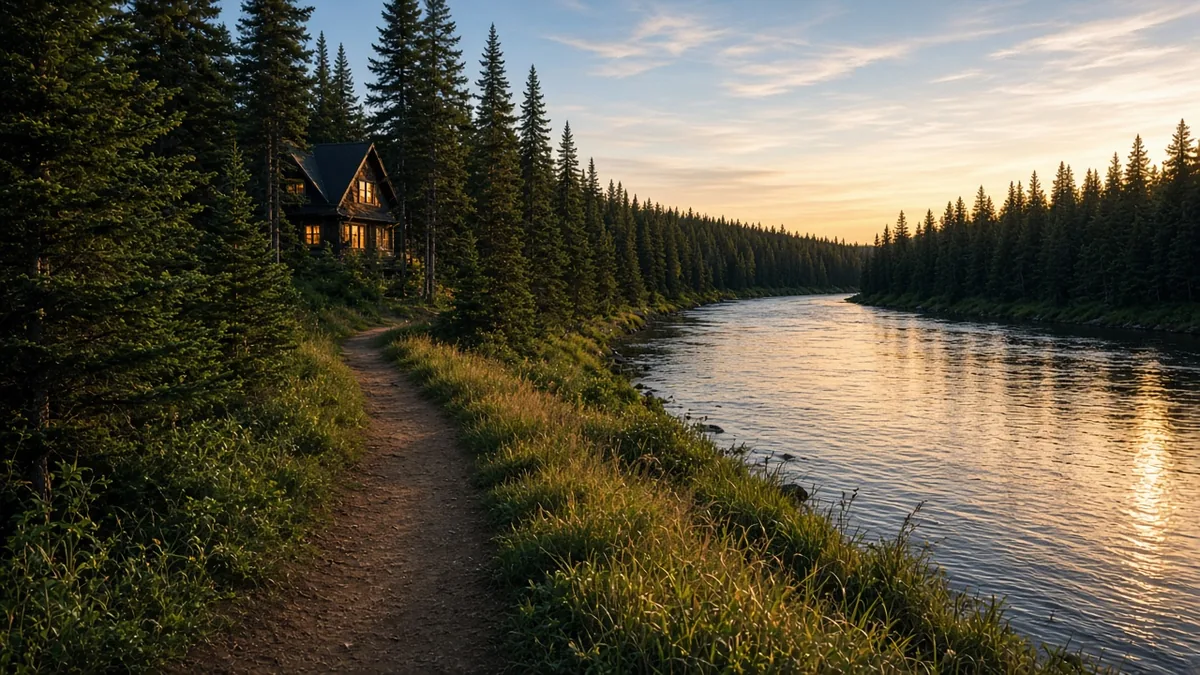
Public access on Alaska riverfront property is often a reserved easement “to and along” the water, created when the state disposed of the upland. AS 38.05.127 says that before the state sells, leases, grants, or otherwise disposes of an interest in state land adjacent to a body of water, the commissioner determines whether the water is navigable, public, or neither. If it is navigable or public, the commissioner provides the easements or rights-of-way needed for free access to and along the water, unless limiting access is necessary for other beneficial uses or public purposes. The statute also says those to-water easements are established about once each mile unless the commissioner makes a written finding to limit them. It does not, in the section itself, state a width in feet. This page will not add one.
Alaska Home HQ is educational. It is not the Department of Natural Resources and it is not a lender. Subject to credit approval. A section-line easement is a different reservation, on the section-line easement page. A federal 17(b) easement across ANCSA land is the 17(b) page. This page is the state’s to-and-along access when the state sold waterfront, including lots people shop along the Kenai near Soldotna.
Where public access on Alaska riverfront property shows up
The patent, the survey, and the title commitment are the three places the easement is real. A patent issued when the state conveyed the land may reserve a specific easement to the water and a specific easement along the water. The survey draws it. The title report excepts it. A listing that says “private riverfront” can still be a listing subject to that reservation. People discover the path when a neighbor walks the bank with a fishing rod. The discovery is late if the buyer already waived title review.
Not every river lot has this easement. AS 38.05.127 applies to disposals of state land. Land that left federal ownership by a different patent, land that was homesteaded under federal law before this reservation existed, and land the state never owned are different histories. The way to know is the patent and the status plat, not the fact that the lot touches water. A seller who says “there is no easement because I have never seen anyone” has not read the patent. Order it.
Subsection (d) of the statute allows the department, on application by a municipality or an affected owner, to vacate, release, modify, or relocate an access easement reserved in certain municipal-entitlement patents, if the commissioner finds the change consistent with the public interest. That is an application, not a fence. A buyer who plans to close the bank should assume the easement stays, unless a recorded vacation is already in the file. Do not write an offer that depends on a vacation that has not happened.
Subsection (c) says the section does not limit the public’s constitutional right to use navigable or public water. An easement on the upland and the public use of the water itself are related and are not identical. This page is the reserved upland easement. It is not a full account of fishing from a boat. The waterfront homes guide is the broader buying conversation. Read the easement before you fall in love with a lawn to the water.
What it does to a house, a septic, and a loan
An easement is a use of the land by someone other than the owner. A house, a deck, a well, or a septic system inside the reserved strip is an improvement in the easement. Title companies except the easement. They do not, by excepting it, promise the improvement is legal. Lenders want the collateral. An appraiser who values a lawn and a dock as if the public cannot walk there is valuing a privacy the patent did not sell. Give the appraiser the survey with the easement drawn. Ask whether the dwelling sits outside it. A dwelling in the easement is a problem for both value and for whether the improvement can stay.
The Kenai River property financing page covers lending on that river. Access easements are one of the title items that page cannot see from a listing photo. Along-bank access can cross the only flat ground, which is also where an owner wanted a guest cabin. The subdivision covenants page may add a second set of limits. The state’s easement and the subdivision’s setback can stack. Neither one cancels the other.
A section-line easement runs on a section line and may be a road reservation. It is not the to-and-along. A lot can have both: a section-line on one side and a river easement on the other. The prescriptive easement page is a third way the public or a neighbor may have a right, earned by use rather than reserved in a patent. If the survey is blank and people have walked a path for a long time, you may be in that article instead of, or in addition to, this one. Say which document you are relying on.
Vacating or moving the easement, where the statute allows an application, is a DNR process with a public-interest finding. It is not a condition a lender will waive because the buyer intends to apply later. If the purchase only works with the easement gone, the contract has to wait on the recorded vacation. Most purchases work with the easement in place, once the buyer understands that the bank is not a private yard.
How to read the commitment
The exception will cite the patent or the plat. Read the cited document, not only the one-line exception. “Easement for public access” without the drawing is not enough to site a cabin. A footage printed in a listing is not enough either, unless the patent or the survey states the width. This page refuses to supply a width the statute does not state. If the survey prints a width, that width is a fact about this parcel. Bring it to the builder and the lender as this parcel’s fact.
Financing is ordinary once the title is understood. The easement does not by itself make the lot unlendable. A structure in the easement, a legal description that ignores the plat, or an access problem that leaves the lot landlocked except along the river can. Those are survey and title conditions. Fix them in the title period. The home buying contingencies page is where that deadline lives.
Buyers still need a loan sized to the house they can actually use. Rates vary and are subject to credit approval. Premier Mortgage (NMLS# 1168048) can look at a river purchase when the survey shows the easement and the improvements are where the commitment says they are.
Frequently Asked Questions
Does every Alaska riverfront lot have a public easement along the bank?
No. AS 38.05.127 requires the state to provide to-and-along access when it disposes of state land next to navigable or public water, unless access is limited for another public purpose. Land with a different history may not carry that reservation. The patent and the survey answer it for the lot you are buying. A quiet bank does not.
How wide is the to-and-along easement?
The statute requires access to and along the water, and it says easements to the water are established about once each mile unless a written finding limits them. It does not state a universal width in feet. The width, if there is a stated one, is on the patent or the survey for that parcel. Use that drawing. Do not import a footage from a different lot or from a blog.
Is this the same as a section-line easement?
No. A section-line easement is tied to the section line and is explained on its own page. The to-and-along easement follows the water on land the state conveyed. A parcel can have both. A 17(b) easement is a federal reservation on certain ANCSA lands and is a third document. Read the one the title report actually cites.
Can the owner cancel the public path?
Not by posting a sign. The statute allows certain vacations or relocations on application, for easements reserved in identified municipal patents, if the commissioner finds the change is in the public interest. That is a recorded decision. Until it is recorded, the reservation stands. A purchase that only works if the path is closed should wait on that recording.
Will a mortgage lender refuse a lot with a public access easement?
The easement is usually a title exception, not an automatic denial. The lender and the appraiser need to see that the house and the other improvements are not sitting in the reserved strip, and that access to the lot exists for the owner as well as for the public. Provide the survey with the easement drawn. A listing photo of an empty bank does not show the line.
Ready to Make Your Move?
Get pre-approved for your home loan first — it gives you a competitive edge. Need a listing agent? We can help.
Or call 9078411600 · or email contact@akhomehq.com
Disclaimer: This article is for informational purposes only and does not constitute financial, mortgage, legal, or tax advice. Interest rates, loan programs, eligibility requirements, and fees are subject to change without notice and may vary based on your individual circumstances. Alaska Home HQ is not a lender, broker, or financial institution. All loan applications are processed by Premier Mortgage (NMLS: 1168048). We may have a business relationship with Premier Mortgage and may receive compensation when you use their services through our links. Consult a licensed mortgage professional before making financial decisions. Terms of Service · Privacy Policy