Alaska Volcanic Ashfall When Buying a Home
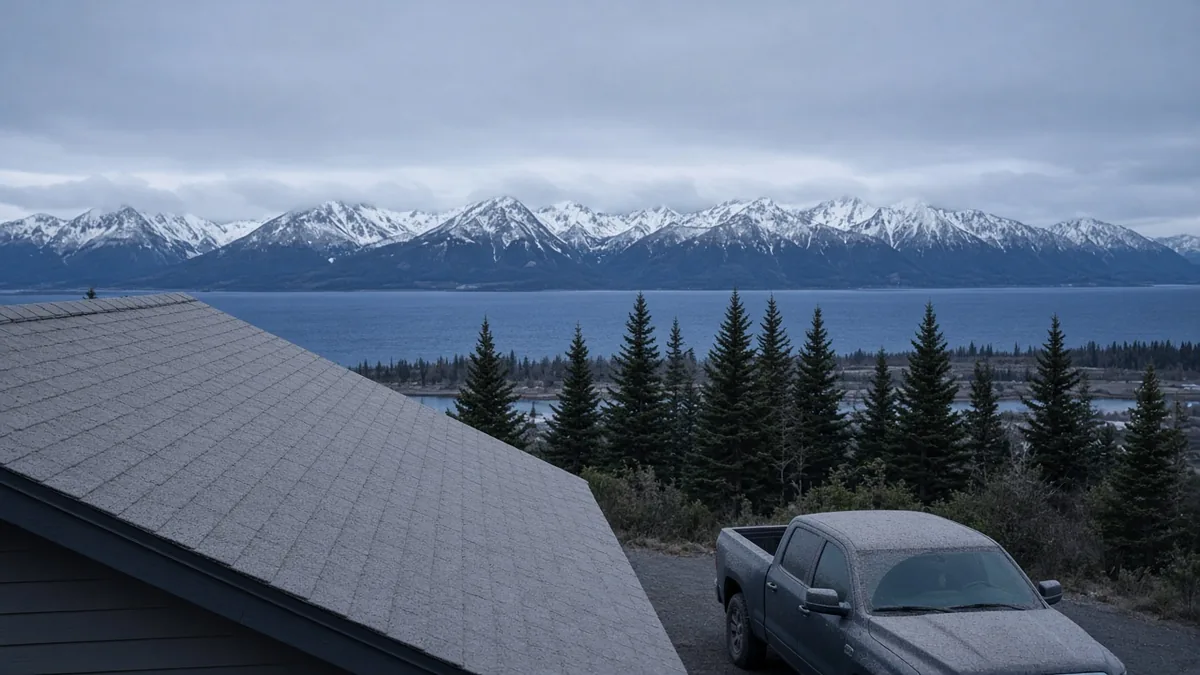
Alaska volcanic ashfall when buying a home on the Kenai Peninsula or in Anchorage is usually distal ash, fine material that fell far from the vent, not a lava flow and not a landslide. Cook Inlet volcanoes have sent ash over communities that are a long drive from the mountain. The house questions are the roof, the gutters, the air intakes, and whether anyone can show what a past fall did to this building. The Alaska Volcano Observatory publishes current activity. The U.S. Geological Survey observatory page is the federal companion. This article does not invent a thickness, a date, or a probability.
Alaska Home HQ is educational. It is not a lender, a volcanologist, or a roofer. Subject to credit approval. Ground that slides is the landslide page. A roof that dams ice is the ice dam page. This page is ash on a house someone is buying, in a community such as Kenai that can be under a plume without being on a volcano.
What Alaska volcanic ashfall when buying a home actually does to a house
Ash is abrasive, and when it is wet it is heavy. A thin dry dusting and a wet loaded roof are different loads. Because this page will not state a depth that is “safe,” the inspection has to say what is on this roof now, and what the structure shows. A roofer who can see the sheathing from the attic, and who can say whether the roof was replaced after a known fall the owner describes, is more useful than a story about “the time it got dark.” Ask for photos of the attic side of the roof, the flashing, and the gutters. Ash left in a valley of a metal roof can hold moisture against the finish. Ash in a composition shingle’s granules is harder to see. The roofer’s note should name the roof type.
Air intakes are the second system. Furnaces, heat-recovery ventilators, and the combustion air for a boiler pull outdoor air. Ash in a filter, a scored blower, or a plugged intake screen is the mechanical evidence. The home inspection checklist is the walk-through. Add the mechanical room on purpose. A clean filter installed the morning of the inspection hides the one that was packed with grit. Ask whether filters were changed for the showing. It is a fair question.
Vehicles and generators clog too, and they are personal property unless the contract includes them. The house file still cares about any intake that is part of the dwelling’s heat. A blocked intake on a combustion appliance is a safety condition, ash or not. If the inspector writes it up, treat it as a repair, not as a geology essay.
What a buyer can verify without a fake statistic
AVO is the place to see whether a volcano is restless now. It is not a house-specific damage report. USGS is not going to inspect the attic in Kenai. The seller’s disclosure, the roof invoice, and the inspector’s photos are the house record. Alaska disclosures ask sellers to report material facts they know. A past ashfall the seller remembers, and any repair, belong in that disclosure if the form or the duty reaches them. A buyer who wants a representation that the roof was replaced after ash should write that representation into the contract, not into a hope about the disclosure checkbox.
Insurance is the other practical reader. Ask the carrier whether ash and volcanic dust are covered, excluded, or limited, and get the answer in the quote. Policies differ. A loan generally needs a binder, and a binder that excludes the hazard the buyer is worried about is a fact to price in, not a surprise after the first plume. The homeowners insurance requirements explain why the binder is in the loan file. They do not summarize every volcanic exclusion.
Do not treat a landslide map as an ash map. Cook Inlet communities can have both steep ground and occasional ash. The landslide page is for slope failure. Buying on a flat street in town because of ash is a roof-and-filter decision. Buying on a bluff is a ground decision. Say which one the inspection was hired to answer.
Interior Alaska and Southeast are not the same ash problem as a Cook Inlet community downwind of the inlet volcanoes. A buyer relocating to Kenai from a region with no ash history is the reader this page is for. The house can be an ordinary house. The maintenance habit is what changes: filters, gutters, and a roof that can be cleared without sending people onto a slick metal surface in the wind. None of that is a reason to invent a return period.
Appraisal, loan, and the contract
Appraisers note condition they see. Ash stains and a failing roof become a condition report if the roof is at the end of its life, whether or not the cause was ash. A roof that is sound, with a clear attic, does not become unlendable because a volcano exists across the inlet. The FHA property standards checklist is the habitability list. Use it for the roof and the mechanicals that are actually damaged. Do not add a volcanic rider the handbook does not contain.
The contract can include a roof inspection and a mechanical inspection beside the general inspection. Put the deadlines where the rest of the contingencies live, on the contingencies page. A credit for “future ash” is not a repair. A credit for a roof the inspector says is done is a roof negotiation. Keep the geology out of the repair addendum so the lender sees a normal condition or a normal credit.
Pre-approval still comes before the offer. The peninsula’s prices and the borrower’s payment are the loan. Ash is a maintenance and insurance fact beside that loan. Rates vary and are subject to credit approval. Premier Mortgage (NMLS# 1168048) can size the purchase while the roof inspection is still inside its deadline.
Frequently Asked Questions
Does volcanic ash make a Kenai house uninsurable or unlendable?
Not as a category. A damaged roof, a plugged combustion intake, or a policy exclusion can stall a particular file. A sound house with a binder the lender accepts can close with a volcano across the water. Ask the carrier about ash in the quote, and ask a roofer what this roof shows. AVO’s activity page is not an appraisal.
How is ashfall different from a landslide when buying?
Ash is material that falls on the building, often far from the vent. A landslide is ground movement under or toward the building. They have different inspections and different pages on this site. A community can face either one. Hire the inspection that matches the hazard you are actually under, and do not use a slope study as a roof report.
What should an inspector look at for ash?
The roof surface, the attic side of the sheathing, gutters and valleys, and the air intakes and filters for the heat. Ask whether filters were changed just for the showing. A wet, heavy load and a light dusting are different conditions. The report should describe what is present, not recite a regional history nobody measured at this house.
Can the seller just say the roof survived the last eruption?
A sentence in a disclosure is the seller’s knowledge. A roofer’s letter is an observation of this roof. If the buyer’s offer depends on a replacement after ash, write that into the contract with the invoice or the inspection as the test. Memories of a dark afternoon do not identify which layer of shingles is on the house now.
Does a mortgage require volcanic coverage?
The loan requires the insurance the lender’s guidelines and the policy actually provide. Ask the carrier whether ash is covered and get that answer in the binder. This page will not state that every Alaska policy treats volcanic dust the same way. Read the exclusions on the quote you are buying, not a summary from a different company.
Ready to Make Your Move?
Get pre-approved for your home loan first — it gives you a competitive edge. Need a listing agent? We can help.
Or call 9078411600 · or email contact@akhomehq.com
Disclaimer: This article is for informational purposes only and does not constitute financial, mortgage, legal, or tax advice. Interest rates, loan programs, eligibility requirements, and fees are subject to change without notice and may vary based on your individual circumstances. Alaska Home HQ is not a lender, broker, or financial institution. All loan applications are processed by Premier Mortgage (NMLS: 1168048). We may have a business relationship with Premier Mortgage and may receive compensation when you use their services through our links. Consult a licensed mortgage professional before making financial decisions. Terms of Service · Privacy Policy