Developing Vacant Land in Alaska After Closing
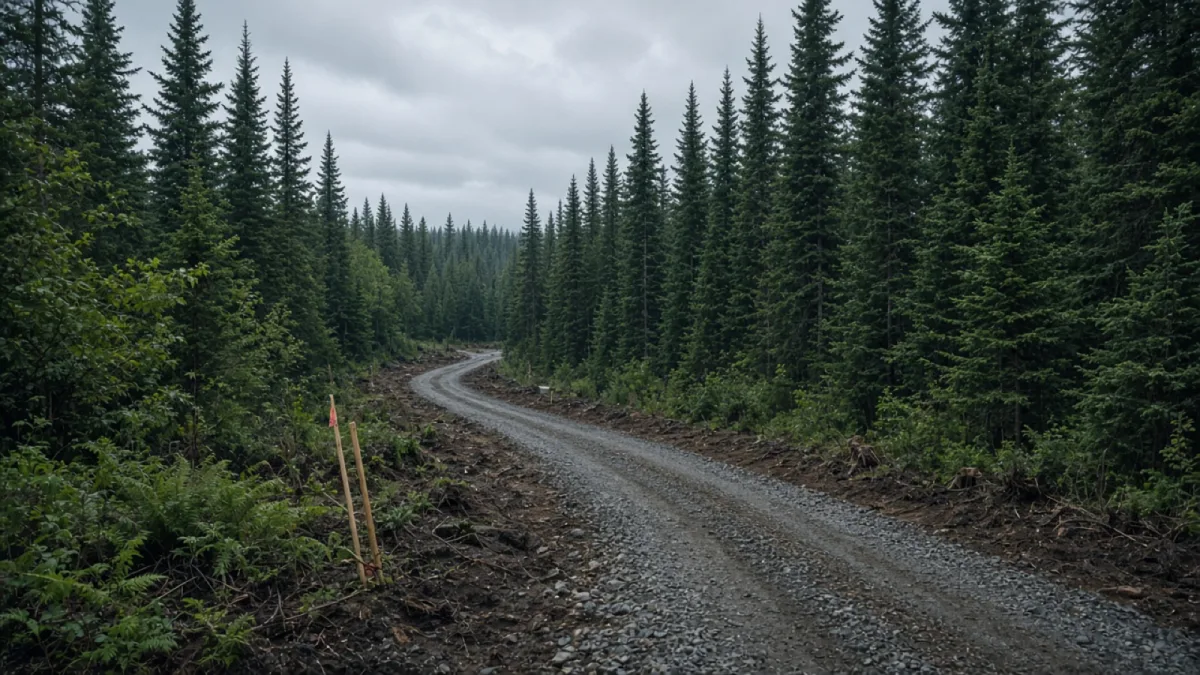
Developing vacant land in Alaska starts the day after the deed records — not in the Facebook thread about “how to buy land.” You already own the parcel. Now you need a legal driveway and culvert, a drinking-water source, an Alaska Department of Environmental Conservation wastewater system, power (or a real off-grid design), and enough geotech to know whether the pad will move. This is not another MLS checklist. It is the construction sequence that blows first-year budgets in the Mat-Su, Kenai, and Interior.
Alaska Home HQ is educational. We are not a contractor, DEC, or a lender. You may later finance a completed home; rates vary; subject to credit approval.
Developing Vacant Land in Alaska: The Order of Work
- Confirm what you actually bought — survey, access, covenants, floodplain, and borough zoning. If the plat does not show a constructed approach, you own a drawing.
- Geotech / soils — especially Interior silt, hillside clay, and coastal peat. A septic design and a foundation design both start here.
- Driveway and culvert — legal approach permit from the borough or DOT&PF, not a summer two-track across a neighbor.
- Well or water service — drill or tap. Water quality and quantity inform the house plan.
- ADEC wastewater — design, install, inspect. This is state law.
- Power, gas, comms — or a specified off-grid system, not an extension cord.
- Foundation and house — only after the site can take them.
Doing the house first and “septic later” is how people winter in a shell they cannot finance or sell. If you are still shopping dirt, use buying land in Alaska and the vacant land checklist. This article assumes you already closed.
Driveway and Culvert — The First Winter Problem
A 200-foot driveway that looks fine in July becomes a sheet of ice with no turnaround for a fire truck in January.
- Get the approach permit before you cut the ditch. Borough roads and state highways have different desks.
- Culvert size and invert are drainage, not decoration. Undersize it and you flood the neighbor — or your own septic field.
- Budget gravel, geotextile, and a vehicle that can maintain the road. HOA or road-service-area dues, if any, do not replace a last-mile driveway.
- Emergency turnaround and grade matter for insurance and, later, for a mortgage inspector.
Mat-Su and Kenai lots fail here more than they fail on “view.” If the only access is a handshake trail, you do not have a homesite yet — you have a dispute.
ADEC Wastewater — Cite Alaska, Not HUD
On-site domestic wastewater in Alaska is regulated by DEC under 18 AAC 72, not by an FHA flyer. Start at DEC’s wastewater program and the current onsite technical guidance.
State standards that actually show up on designs (read the current AAC text; DEC can require greater distances):
- 18 AAC 72.100 and related private-water separation rules commonly require 100 feet horizontally between a private drinking-water source and a septic tank or soil-absorption system. That 100-foot figure is the Alaska rule that was mis-stated in older consumer content as if it matched a shorter federal pamphlet. Use the AAC.
- 18 AAC 72.520 (conventional system separations) includes a 100-foot horizontal setback from specified water bodies to a septic tank, soil-absorption system, lift station, or sewer manhole; four feet vertical from the bottom of the distribution media to the annual high water table; and six feet vertical to impermeable material such as bedrock, clay, or permafrost.
Those numbers are Alaska Administrative Code. They are not FHA/HUD “minimum property standards” dressed up as borough law. If a contractor says “HUD only wants 50 feet,” that is a federal loan conversation — and it does not override DEC. When federal and state differ, the governing Alaska standard is what you install.
Hire a certified installer / designer. File the documentation. A mortgage later will ask for it (well-septic mortgage guide).
Holding tanks and experimental systems have their own DEC paths. Pit privies are a zoning and DEC conversation — not a default in residential districts (see the Fairbanks dry cabin piece if that is your actual plan).
Wells, Utilities, and Geotech
Water. A dry hole or a high-arsenic well changes the house. Test for the panel DEC and your lender will care about. Cisterns are a system, not a shrug.
Power. Chugach, MEA, GVEA, HEA, and smaller co-ops each have line-extension tariffs. Get a written cost to the pedestal. Off-grid is a design (solar, storage, backup heat), not a lifestyle hashtag. Off-grid financing is a later loan problem if the system is theater.
Gas. ENSTAR and other gas utilities are lot-specific. Propane is a forever operating cost.
Geotech. Permafrost, buried ice, and peat eat foundations. Spend the boring before you spend the ICF. See permafrost foundations and foundation/permafrost.
HUD’s current published Mat-Su HMFA median family income is $119,300 (HUD income limits). That does not pay for a 400-foot line extension in Wasilla or a mound system in Sterling.
What This Costs Relative to the Lot Price
A $50,000 lot plus $80,000 of driveway, well, septic, and power is a $130,000 site, before the house. Construction loans want a buildable site, not a wish (construction loans).
Sequence cash:
- Permits and design first (smaller checks, high leverage)
- Driveway so trades can reach the pad
- Well and septic so the house has legal utilities
- Power
- Foundation
Financing a completed home later is conventional, FHA, VA, or USDA on a dwelling that meets property rules. Land development itself is usually cash, a construction loan, or a specialized land loan — not a 3% HomeReady on dirt.
AHFC energy or rural products, if they ever apply to the finished house, are state programs. Premier Mortgage (NMLS# 1168048) does not originate AHFC. If you may qualify for a construction-to-permanent or purchase loan on a house you intend to build, get a quote when the site plan is real. Rates vary; subject to credit approval.
Frequently Asked Questions
What is the Alaska DEC septic setback from a well?
Alaska’s on-site rules in 18 AAC 72 commonly require 100 feet horizontally between a private drinking-water source and a septic tank or soil-absorption system. DEC can require more. Read 18 AAC 72.100 and the current guidance at dec.alaska.gov/water/wastewater. Do not use an FHA number as if it were DEC.
Do I need a culvert permit to build a driveway?
If you connect to a public road, you typically need an approach permit from the borough or the state, and a culvert that matches the drainage design. Cutting the ditch without a permit is how you buy the lot twice — once from the seller, once in restoration.
Can I live in a dry cabin on the lot while I install a septic?
Zoning district and DEC rules decide that, not a blog. Some FNSB residential districts ban pit privies. A temporary trailer may need a separate permit. Ask the borough planner before you winter there.
Will a lender finance vacant land development in Alaska?
Standard home loans finance dwellings, not raw site work. Construction or land loans are different products with larger down payments. Premier Mortgage (NMLS# 1168048) can discuss paths they originate once there is a house plan — rates vary, subject to credit approval. Site work is often cash.
How do permafrost and high water table change the septic?
18 AAC 72.520 requires vertical separation from the drainfield media to the seasonal high water table and to impermeable layers including permafrost. That is why mound systems and imported fill show up. Geotech first; design second; install third.
Ready to Make Your Move?
Get pre-approved for your home loan first — it gives you a competitive edge. Need a listing agent? We can help.
Or call 9078411600 · or email contact@akhomehq.com
Disclaimer: This article is for informational purposes only and does not constitute financial, mortgage, legal, or tax advice. Interest rates, loan programs, eligibility requirements, and fees are subject to change without notice and may vary based on your individual circumstances. Alaska Home HQ is not a lender, broker, or financial institution. All loan applications are processed by Premier Mortgage (NMLS: 1168048). We may have a business relationship with Premier Mortgage and may receive compensation when you use their services through our links. Consult a licensed mortgage professional before making financial decisions. Terms of Service · Privacy Policy